
Last updated November 2, 2026
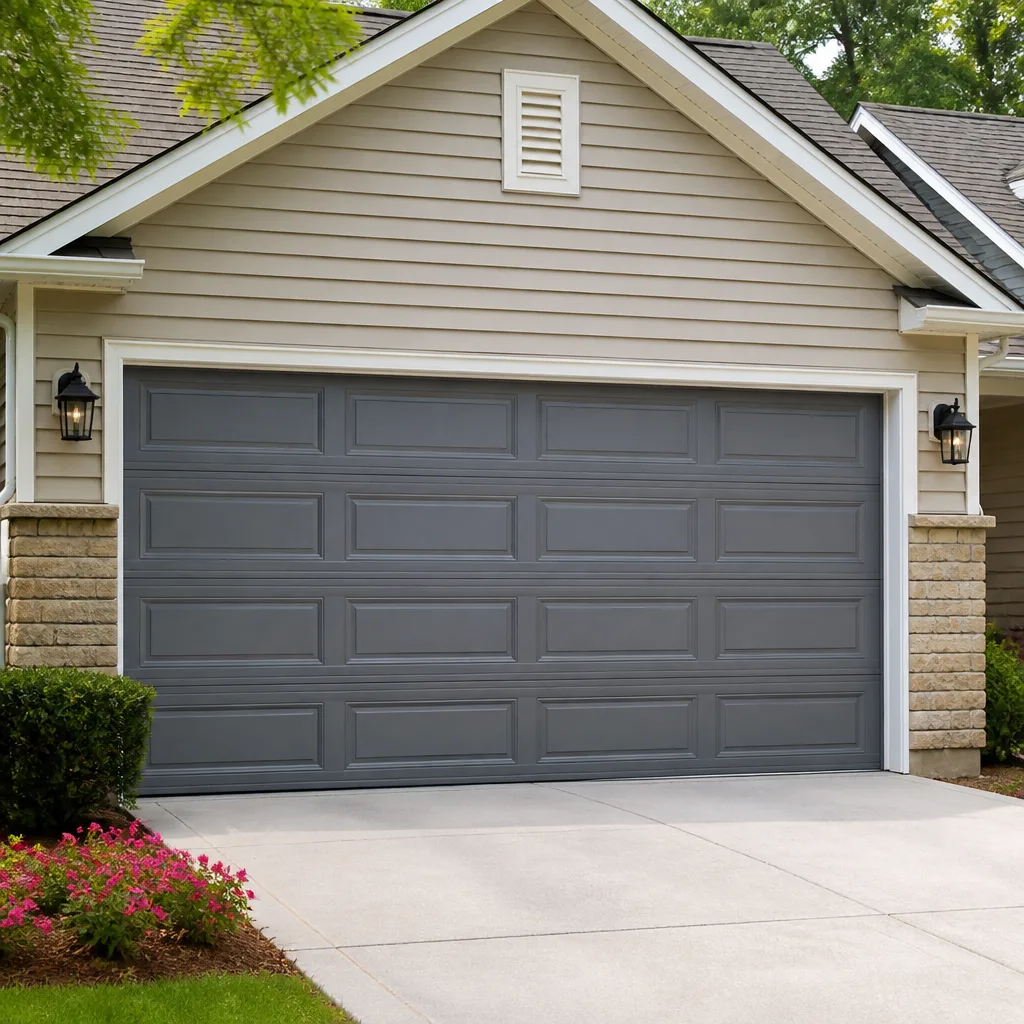 Raised-panel steel
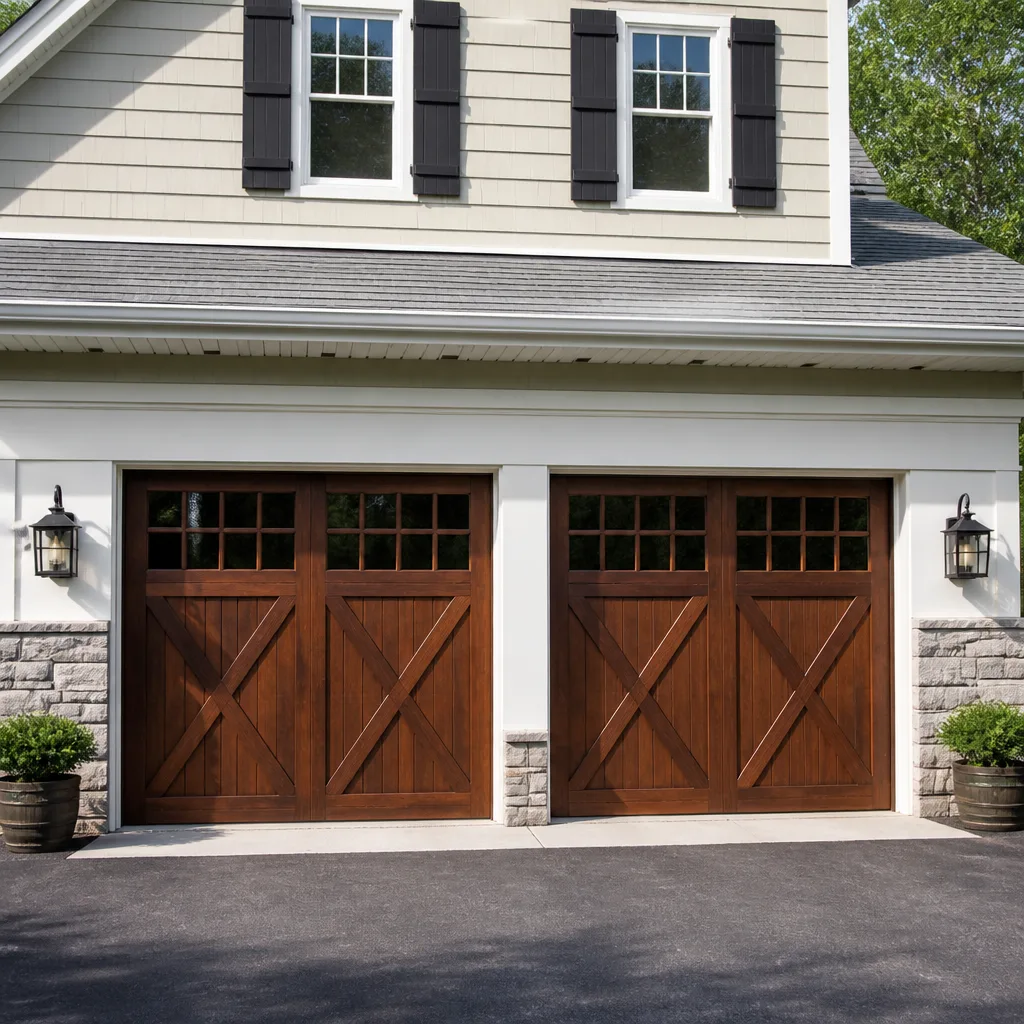 Carriage house
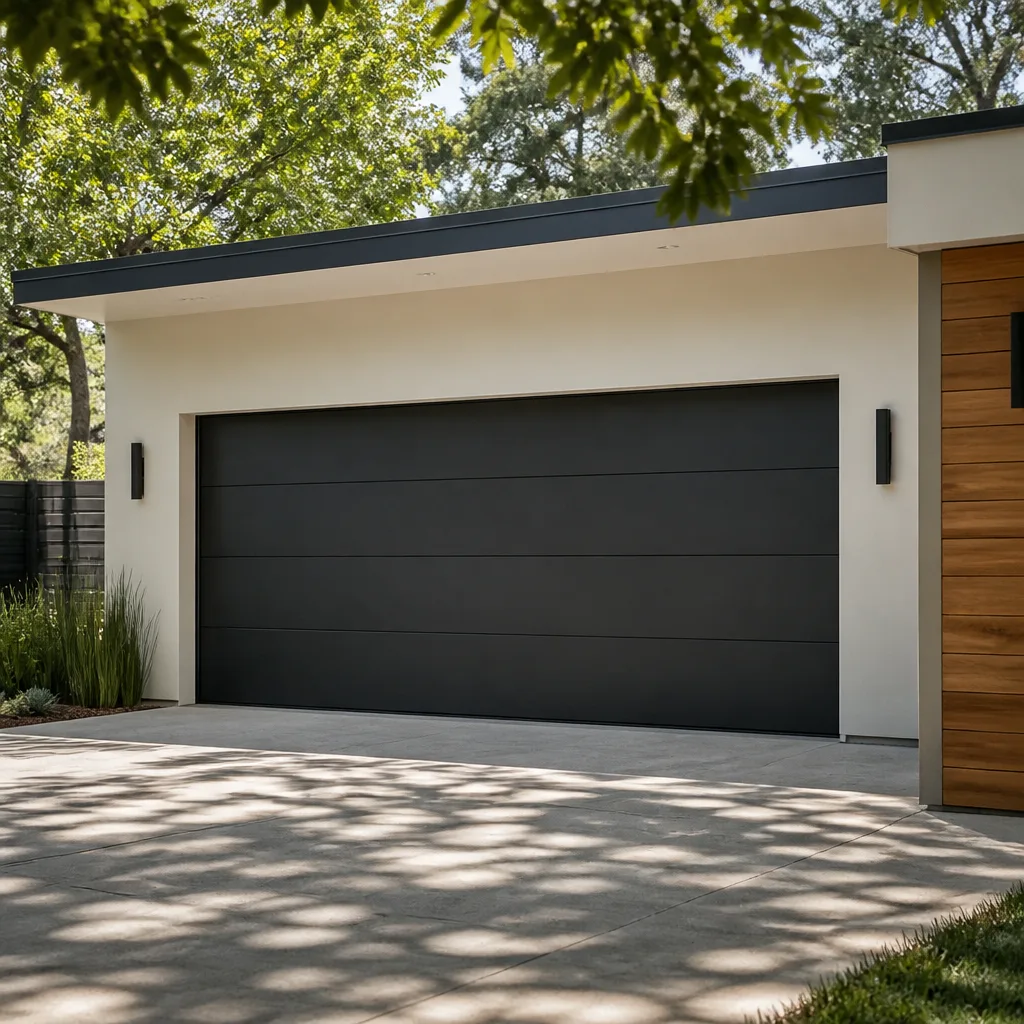 Modern flush
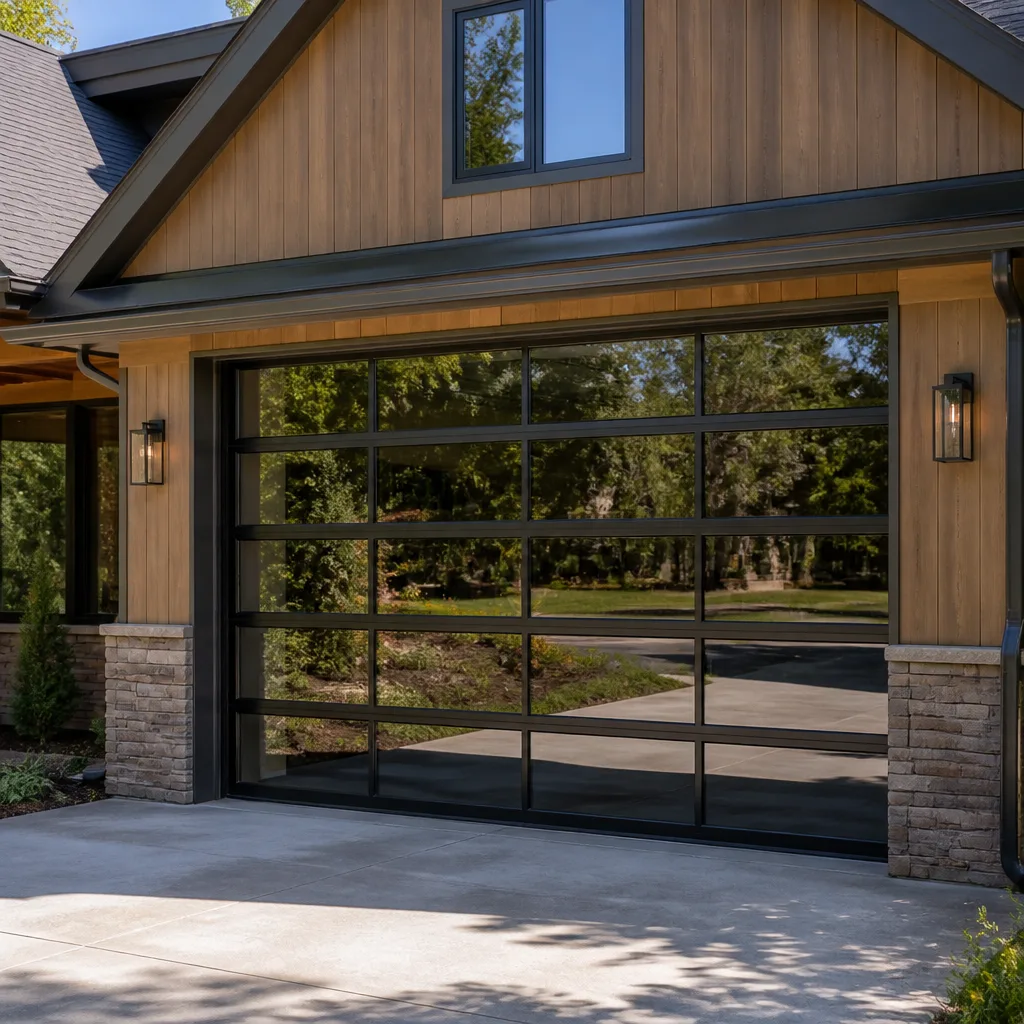 Full-view glass
 LiftMaster openers
 Chamberlain openers
Full 25-point door and opener safety check with every visit - springs, cables, rollers, tracks, and your LiftMaster or Chamberlain opener included
You get a price before we start. It does not change when the truck arrives.
Get your free estimateGarage Door Warning Signs: A Panorama City Homeowner’s Reference Guide
A grinding noise when your garage door opens means something completely different than a grinding noise when it closes. Yet most “warning signs” articles lump every sound into the same bucket, which sends Panorama City homeowners down the wrong repair path and turns a $40 roller replacement into a $400 opener rebuild. This guide maps each symptom to the component that’s actually failing, so you know what you’re hearing, what it means, and whether it’s a fix-now or a watch-closely situation. By the time you finish reading, you’ll have a working diagnostic framework that most generalist articles skip entirely.
Quick Answer
The most common garage door warning signs in Panorama City are grinding or squealing during specific phases of travel, visible gaps in torsion spring coils, a door that’s noticeably slower in one direction, and opener force-sensitivity errors on smart systems. Each signal points to a different mechanical failure, and treating them as one generic problem leads to misdiagnosis and repeat repairs. The right approach is matching the symptom to the component: springs, rollers, cables, track, or opener motor.
Styles & brands we work with
- Raised-panel steel
- Carriage house
- Modern flush
- Full-view glass
- LiftMaster openers
- Chamberlain openers
Table of Contents
- The Symptom-to-Component Diagnosis Map
- Visual Warning Signs of Spring Failure Before It Happens
- Slow Door: Opener Motor Wear vs. Mechanical Resistance
- Track Alignment vs. Roller Wear: How to Tell Without Touching
- Smart Opener Warning Signs: Connectivity, Force Sensitivity, and What They Indicate
- How Panorama City Weather and Climate Affect Your Door
- Common Mistakes to Avoid
- When to Call a Professional
- Frequently Asked Questions
The Symptom-to-Component Diagnosis Map
This is the framework we use on every service call in Panorama City, and it’s the section most generic guides miss entirely. A sound during opening tells you something different than a sound during closing because different components are under load at different phases of travel. Here’s the map.
Grinding During Opening
When you hear grinding as the door goes up, the door is fighting resistance while the opener is doing the heaviest lifting. The load on the motor is at its peak during the first few feet of upward travel, which is why grinding in this phase almost always points to one of three things: worn rollers that are no longer round, a track that’s pinched or misaligned, or a torsion spring that’s lost enough tension that the motor is compensating for the imbalance. In our experience with homes near Van Nuys Boulevard, we see roller degradation accelerate in doors that face direct afternoon sun, because the nylon bearing surfaces harden and crack faster.
Grinding During Closing
Grinding on the way down is a different problem. The door is traveling with gravity, not against it, so the opener motor isn’t working hard. A grinding sound during descent usually means the door’s weight is pressing rollers hard against a track that’s out of alignment, or you have cable drums that have shifted on the shaft and are now spooling the lift cables unevenly. The cables then rub against the drum flanges, producing a sound that’s easy to mistake for a roller issue. This distinction matters because replacing rollers won’t fix a cable drum problem.
Popping vs. Squealing
A sharp popping sound that recurs at the same point in travel usually comes from a section hinge that’s binding or a roller that’s flat-spotted and slamming in the track. It’s directional, consistent, and mechanical. Squealing, by contrast, is a continuous high-frequency sound that follows the door’s entire travel path. Squealing is almost always a dry or failing roller bearing, and if you run a door from a brand like Raynor or Amarr that’s been through several Panorama City summers, the original rollers are likely at end of life. We replace them with sealed-bearing rollers that don’t need lubrication.
Scraping: The Most Misread Sound
Scraping is the sound homeowners most often attribute to “the door being old,” when in reality it’s a specific mechanical issue. A scrape on one side only points to that side’s track or the bottom bracket on that side scraping against the jamb. A scrape on both sides points to the door’s overall balance shifting. A scrape that only happens in the last foot before the door seats indicates the door is racking, meaning the panels are no longer square to the opening. Each of these has a distinct repair path, and treating them as one “scraping noise” problem wastes time and money.
For readers in Panorama City who want a professional diagnosis rather than a guess, our Garage Door Repair in Panorama City service covers the full mechanical diagnosis, from springs to cables to track alignment.
Visual Warning Signs of Spring Failure Before It Happens
Torsion springs don’t usually fail without visible evidence. You just have to know what you’re looking at. This is the highest-value section of this guide for one reason: a spring that fails while you’re parked underneath the door creates a genuinely dangerous situation, and the warning signs are visible weeks or months in advance.
What to Look For on the Coils
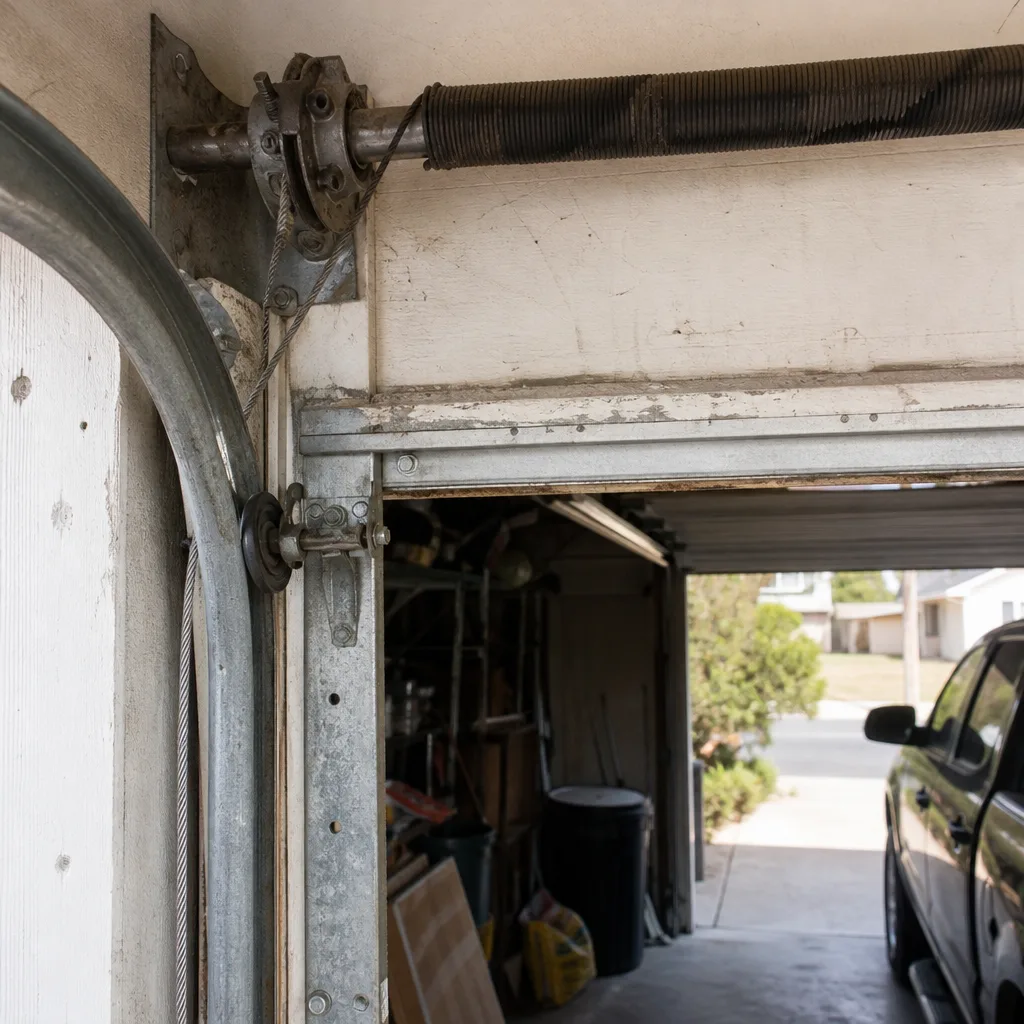
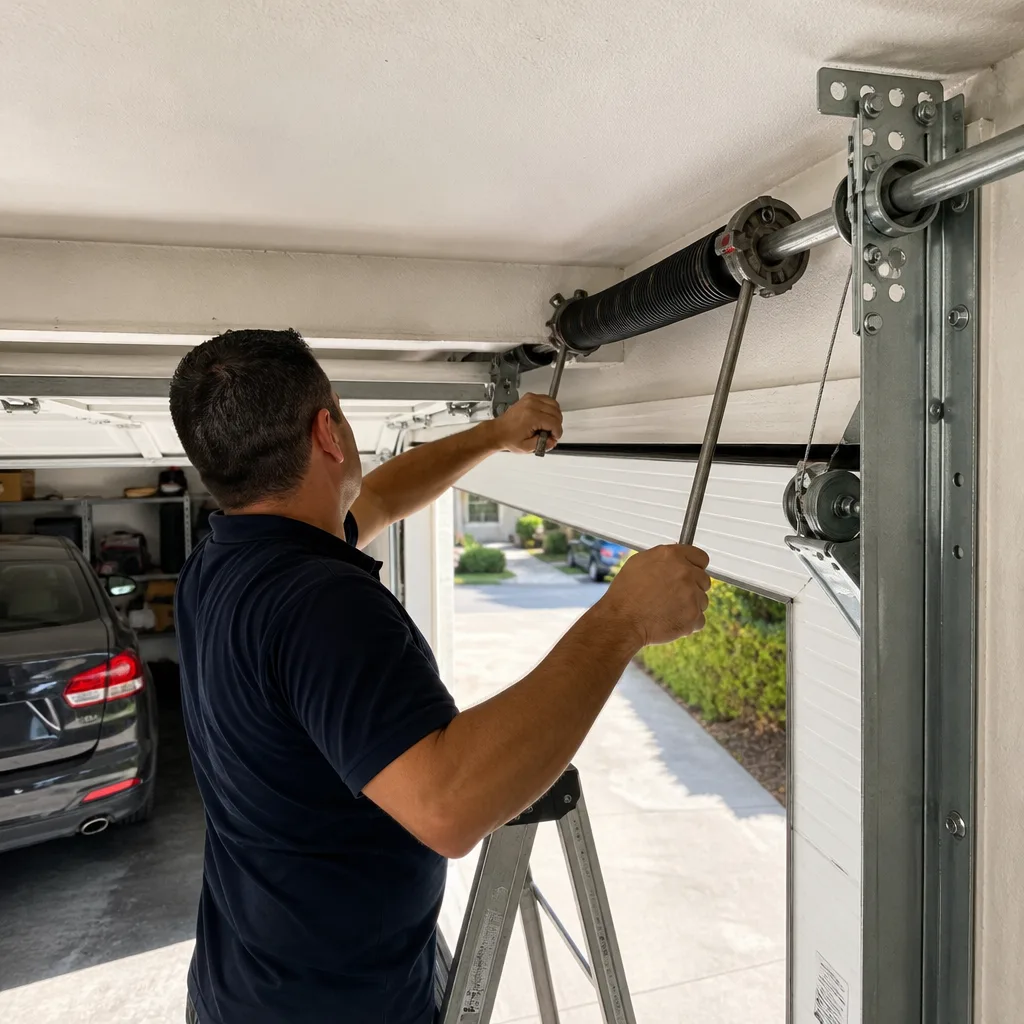
Stand inside your garage with the door closed and look up. The torsion spring sits on a shaft directly above the door opening. If the coils are tightly packed and uniform, the spring is intact. If you see a visible gap between two adjacent coils, that spring has already begun to fail. A gap means the spring has fractured at that point, and the only thing preventing a complete separation is the remaining connected coils. This is a replace-now condition, not a monitor condition.
Rust and Corrosion as a Predictor
Rust on a torsion spring is not cosmetic. Steel springs under constant torque fail faster when surface corrosion creates micro-fractures, which then propagate under load. Panorama City’s dry climate is forgiving compared to coastal areas, but garages that trap heat and humidity from washers, dryers, or water heaters expose springs to enough moisture to accelerate this process. If the spring shows rust bloom across more than 10 to 15 percent of its surface, we recommend budgeting for replacement.
Cable Drum Indicators
The cable drums at each end of the torsion shaft are a second early-warning system. Look for the lift cable spooling pattern. A healthy drum wraps the cable in tight, even rows. When the cable is crossing over itself, stacking on one side of the drum, or showing visible frayed strands, the spring is no longer maintaining proper balance and the drum is compensating poorly. A frayed cable is a hazard that requires immediate attention. Do not attempt to unwrap or adjust a cable under tension. This is one of the areas where we strongly advise calling a trained technician, because a cable that releases under load snaps with enough force to cause serious injury.
Door Creep as a Functional Test
Here’s a simple test you can run safely. With the door closed, pull the red emergency release cord and manually lift the door to waist height. Let go. If the door holds position, the springs are balanced. If it creeps downward, the springs are losing tension. If it drops quickly, the springs are failing. This test also tells you something about the overall condition of the system: a door that’s impossible to lift manually at all means the springs are doing nothing and the full weight, roughly 150 to 250 pounds for a typical two-car door, is on you and the opener. That’s a mechanical red flag.
We see spring failures regularly in Panorama City homes with original equipment from the 1990s and 2000s, especially doors from Clopay and older Wayne Dalton units. Springs are rated for a cycle count, not a calendar age, and a door that’s cycled twice daily for 20 years has exceeded even high-cycle springs. If you see a coil gap or experience door creep, call (833) 620-3545 and we’ll diagnose it before the failure, not after.
Slow Door: Opener Motor Wear vs. Mechanical Resistance
A slow garage door gets misdiagnosed constantly. The typical sequence goes: homeowner notices the door is slow, assumes the opener is “getting old,” replaces the opener, and the new opener is just as slow. The problem was never the motor. It was mechanical resistance the old motor was fighting, and the new motor now fights it too. This misdiagnosis costs Panorama City homeowners hundreds of dollars in unnecessary opener replacement.
How to Tell Which One You Have
Pull the emergency release and operate the door by hand. If the door moves smoothly with moderate effort and stays where you put it, the mechanical system is healthy and the slowness is in the opener. If the door is heavy, jerky, or binds at a specific point, the mechanical system has resistance and the opener motor has been working harder than it should for months or years. A door that’s mechanically resistive will eventually burn out even a brand-new opener, because motor windings are not designed for sustained overload.
Opener Motor Wear: The Real Signals
A genuinely worn opener motor presents differently than most people expect. It’s not just “slow.” You’ll notice the opener runs hot on the back of the unit after a single cycle. You might hear a low hum that wasn’t there a year ago, or the opener smells warm, almost like hot electrical insulation. Some openers from LiftMaster and Chamberlain will begin to stutter on startup because the start capacitor is failing. This is the component that gives the motor its initial jolt, and it degrades before the motor windings do. If your LiftMaster opener starts slowly but evens out, suspect the capacitor, not the motor.
Mechanical Resistance: The Silent Motor Killer
When the mechanical system is the cause of slowness, the usual suspects are: worn rollers that have gone out of round, a torsion spring that’s lost tension or broken on one side, dry or seized hinges, or a track that’s drifted out of square. Each of these adds friction. A chain-drive opener from Craftsman or Genie that’s been paired with original nylon-bushing rollers from the 2000s is a classic Panorama City scenario. The opener motor has been overworking for years, and the slow travel is the door telling you the mechanical system needs service before the opener joins it in failure.
The practical takeaway: if your door is slow, do the manual-lift test before you replace anything. It takes 30 seconds and it tells you which side of the system is failing. If the answer is mechanical, the fix is usually rollers, springs, or track alignment, all of which cost less than a new opener. If the answer is the opener, our Garage Door Opener Repair in Panorama City service handles motor, capacitor, gear, and limit-switch failures on LiftMaster, Chamberlain, Genie, Craftsman, and Raynor openers.
Track Alignment vs. Roller Wear: How to Tell Without Touching
You can distinguish a track alignment issue from a roller wear issue without removing a single component, and you should do this before calling anyone so you can describe the symptom accurately. This distinction changes the repair quote from a few hundred dollars to potentially more than a thousand, depending on what’s actually wrong.
Visual Inspection: The 60-Second Version
- Close the door and look at the gap between the track and the door edge on both sides. The gap should be consistent from top to bottom. If it’s wide at the top and tight at the bottom, or varies in the middle, the track has shifted. If the gap is uniform but you see flat spots on the rollers, the rollers are the problem.
- Look at the rollers where they enter the track bend. The track curves from vertical to horizontal in a radius. If the rollers are centered in the track through that bend, alignment is good. If a roller rides against one side of the track only in the curve, that track section is out of square.
- Watch the door jamb brackets. The brackets fasten the track to the wall at intervals. If a bracket has pulled away from the jamb even a quarter inch, the track is no longer in plane, and the door is now running through a track that’s subtly twisted.
Roller Wear: What It Looks Like From the Outside
Worn rollers announce themselves visually before they get loud. Look at the roller bodies, not just the wheels. A roller with a flattened spot on the wheel has been skidding instead of rolling, which means the bearing inside has seized. A roller with visible wobble when the door moves has a bearing that’s failing. Rollers with cracked nylon rims are at end of life. None of these require you to touch the door. You’re observing, not adjusting.
Track Shifting in Panorama City Construction
Panorama City has a specific mix of housing stock: mid-century single-family homes, some newer construction, and a lot of garage doors that were installed decades ago and have been through earthquakes. Seismic movement is a real factor here. A track that was perfectly aligned in 2005 may have drifted after the 2019 Ridgecrest sequence or even smaller local events. We routinely see doors in the neighborhoods around Panorama Mall where the track has shifted a half-inch out of square, and the only symptom the homeowner noticed was a door that “sounds different lately.” A track that’s out of alignment will wear rollers unevenly, which then accelerates roller failure, which then makes the track problem worse. It’s a compounding cycle.
One more note: if the door has jumped a cable or the bottom roller on either side has come out of the track, stop using the door and call for service. Operating a door with a dislodged cable or roller can cause the door to rack and drop. This is a call-now situation, not a wait-and-watch situation. Call (833) 620-3545 and describe what you’re seeing, and we’ll tell you whether it’s safe to leave the door in place or whether the opener should stay disconnected until we arrive.
Smart Opener Warning Signs: Connectivity, Force Sensitivity, and What They Indicate
Smart garage door openers from LiftMaster and Chamberlain, particularly the MyQ ecosystem, add a diagnostic layer that older openers never had. These systems report force profiles, obstruction events, and connectivity status, and the data they provide is genuinely useful for separating opener problems from door problems. Most Panorama City homeowners aren’t aware the opener is already telling them what’s wrong.
Force Sensitivity Errors: What Your Opener Is Actually Measuring
Modern smart openers measure the electrical current draw of the motor during every cycle. Higher current draw means the motor is working harder, which means the door or the mechanical system is resisting movement. When a LiftMaster or Chamberlain opener starts throwing force-sensitivity errors or reversing mid-cycle, it’s not being glitchy. It’s detecting resistance that exceeds its programmed threshold. The question is whether that resistance is in the door, the track, the springs, or the opener’s own transmission.
Here’s the distinction: if the opener reverses only when the door is near the floor, suspect the bottom seal is catching on an uneven surface, or the floor itself has shifted. If it reverses mid-travel, suspect the track, rollers, or a spring that’s losing tension and making the door travel unevenly. If it reverses at the top, suspect the limit switch or a panel that’s binding at the header. These are different repairs, and the opener is giving you the data to narrow it down before a technician arrives.
Connectivity Failures: Sensor vs. Motor Signal
A smart opener that drops offline, fails to respond to the app, or intermittently loses Wi-Fi is usually not a motor problem. The most common causes are router placement, interference from other devices on the 2.4 GHz band, or a failing logic board. The logic board in a smart opener is essentially a small computer, and it’s the component most sensitive to power surges, which are not uncommon in Panorama City during summer heatwaves when the grid strains. If your opener’s buttons work at the wall console but the app can’t connect, the wall console bypasses the logic board’s network functions, which points to a logic board issue, not a motor issue.
When Smart Diagnostics Point to the Door, Not the Opener
If your smart opener gives you a force profile that shows increasing current draw over time, that’s the opener telling you the mechanical system is degrading. A healthy door has a stable force profile. A door with failing springs, worn rollers, or a binding track shows a profile that trends upward week over week. No amount of programming, resets, or app updates fixes that. You have to fix the mechanical resistance, and then the force profile returns to normal. This is one of the reasons we diagnose the door and the opener as one integrated system rather than two separate problems. You can’t fix one side in isolation and expect the other to last.
For Panorama City homeowners with smart openers that are throwing errors, our Garage Door Opener Repair in Panorama City service includes logic board diagnosis, force profile review, and sensor calibration on LiftMaster and Chamberlain MyQ systems.
How Panorama City Weather and Climate Affect Your Door
Panorama City sits in the San Fernando Valley, which means hot, dry summers, mild winters, and seasonal Santa Ana winds. Each of these creates specific wear patterns on garage door components, and homeowners who understand the climate connection catch problems earlier.
Heat and Nylon Components
The Valley’s summer temperatures routinely cross 100 degrees, and garage interiors run hotter. Nylon rollers, nylon bushings, and nylon-bearing hinges degrade faster in sustained heat, especially on west-facing doors that absorb direct afternoon sun. The nylon becomes brittle over repeated heat cycles, which is why Panorama City doors from the mid-2000s are now hitting roller end-of-life regardless of cycle count. If your door faces west and you haven’t replaced rollers in the last decade, you’re due.
Santa Ana Winds and Panel Flex
Santa Ana winds create positive pressure against the garage door face when they blow against the door, and negative pressure on leeward walls. Over years, this repeated flexing stresses panel joints, especially on lighter aluminum doors or older steel doors with minimal internal stiffening. The symptom is not dramatic. It’s a door that’s slightly tighter in the opening than it used to be, or a panel joint that’s begun to separate at the stiles. If you see daylight through a panel joint on a windy day, the door is flexing more than the structure was designed for.
Dust, Dirt, and Track Fouling
The Valley is dusty. That dust finds its way into the track channels, roller bearings, and opener rail. Over time, dust and dirt mixed with the small amount of grease or lubricant on the rail creates a paste that increases mechanical resistance. Doors in Panorama City benefit from track cleaning more frequently than doors in coastal or humid climates, simply because of airborne particulate load. If your door sounds gritty during travel, that’s likely what you’re hearing. The fix is cleaning, not replacement, but you have to do it before the resistance destroys the rollers.
Common Mistakes to Avoid
- Replacing the opener before checking the door. At least half the slow-door or “opener seems weak” calls we see in Panorama City turn out to be mechanical resistance in the door system. A new opener on a resistive door just burns out the new opener’s motor faster. Do the manual-lift test first.
- Ignoring a sound because “it’s always done that.” Garage doors are mechanical systems, and a sound that recurs at the same point in travel indicates a specific component under stress. It doesn’t get better on its own. It gets more expensive.
- Greasing a squealing roller instead of replacing it. Sealed-bearing rollers can’t be greased from the outside, and adding lubricant to the outside of a failing bearing does nothing. Replace the roller. If you have nylon rollers with exposed bearings, replacement is still the long-term answer.
- Attempting to adjust or replace torsion springs without the proper tools and training. Torsion springs are under extreme tension, and the winding procedure uses specialized bars. A spring that releases during adjustment is one of the most dangerous things that can happen in a residential garage. This is not a DIY repair.
- Leaving the emergency release pulled and operating the opener. If you pull the red cord and then run the opener, the carriage will eventually re-engage and can do so violently or at the wrong point in travel. Re-engage the door properly or leave the opener off until a technician arrives.
- Judging spring condition by the age of the door alone. Springs fail by cycle count. A door that’s cycled four times daily for eight years has the same spring fatigue as a door that’s cycled twice daily for sixteen. If you use the garage as your primary entry, budget for earlier spring replacement.
- Sharing vague symptoms on a service call. “It sounds weird” doesn’t help a technician. “It grinds during the first two feet of opening, then quiet, then pops once right before it reaches the top” is a diagnosis-level description. Specificity saves time and money.
When to Call a Professional
Call a professional when you see a gap in a torsion spring coil, when a lift cable is frayed or has jumped the drum, when the door has fallen off one side of the track, or when you’ve done the manual-lift test and the door doesn’t hold position. These are not adjust-and-monitor conditions. They are mechanical failures that will get worse, and some of them create real safety risk. The springs and cables on your garage door hold enough tension to cause serious injury if released improperly, and a door that falls is a several-hundred-pound hazard. For anything in this category, call before you operate the door again.
Mesa Garage Door Service offers free estimates in Panorama City. Call (833) 620-3545 and we’ll walk through what you’re seeing, tell you whether the door is safe to operate, and schedule a diagnostic visit. We service the door system and the opener as one integrated unit, which means you don’t need to coordinate between a door company and an opener specialist. One call covers both.
If you’re weighing repair against replacement, our team will give you an honest assessment of the remaining life in your current system. We don’t push new doors when a repair makes more sense, and we don’t patch a failing door when replacement is the financially smarter move. For a full evaluation of your existing door’s condition, see our Garage Door Installation in Panorama City page, and if you’re considering a new opener rather than a new door, see our Garage Door Opener Repair in Panorama City page for repair vs. replacement guidance. You can also learn more about us at our Mesa Garage Door Service home page.
Frequently Asked Questions
The most commonly missed warning sign is a visible gap between torsion spring coils, which indicates the spring has already fractured and is holding by a reduced number of coils. Most homeowners never look up at the spring, and the gap often develops weeks before the spring fully separates. Call (833) 620-3545 if you see a coil gap for a free estimate on replacement.
In Panorama City, common garage door repairs typically range from $150 to $450, with roller replacement usually falling between $150 and $250 per door, spring replacement between $250 and $400 depending on spring rating and door size, and track realignment between $150 and $300. Opener motor or logic board replacement runs higher, typically $250 to $500 depending on the model and parts availability. Every job is quoted before we start work, so there are no surprise additions to the invoice.
Yes, most common repairs including roller replacement, spring replacement, cable replacement, and track realignment can be done the same day in Panorama City because our technicians carry parts for the major brands, including LiftMaster, Chamberlain, Genie, Craftsman, and Raynor, on the truck. Call (833) 620-3545 for same-day availability.
A door that reverses mid-close is usually triggering the opener’s safety reversal because the motor current draw exceeded the programmed force threshold, which means the door hit unexpected resistance somewhere in its travel. The most common causes are track misalignment, a failing spring that’s making the door travel unevenly, or the bottom seal catching on the floor. A reversing door is a symptom, not a setting problem, and it’s worth diagnosing before the underlying issue worsens.
Yes, our service trucks in Panorama City are stocked with parts for LiftMaster, Chamberlain, Genie, Clopay, Amarr, Wayne Dalton, Craftsman, and Raynor systems, which covers the vast majority of doors and openers installed in the Valley. Brand-specific parts mean we can typically complete the repair on the first visit rather than scheduling a return trip.
No. The price we quote you before work begins is the price you pay, and if we find something we didn’t anticipate during the diagnostic, we’ll show you what we found and get your approval on the new number before we touch anything. We don’t do surprise invoices, and we don’t add on charges after the fact.
A door without a visible brand label is usually identifiable by its hardware, panel profile, and track configuration, and in most Panorama City homes from the 1990s and 2000s it’s a Clopay, Amarr, or Wayne Dalton unit. The brand matters less for diagnosis than the component condition, and we can identify the system regardless of the label. If the door is beyond economical repair, we’ll tell you that honestly and walk through replacement options without pressure.
The Bottom Line
Garage doors telegraph their failures through specific sounds, movements, and visual cues, and the key is matching each signal to the component that’s actually failing. A grinding noise during opening is a roller or spring problem. A grinding noise during closing is a track or cable drum problem. A slow door needs a hand-lift test before you blame the opener. A smart opener throwing force errors is usually pointing at the door, not the motor itself. The homeowners in Panorama City who catch these signals early spend less on repairs because they fix components before they cascade into systemic failures. If you’re seeing or hearing something you can’t match to this guide, call (833) 620-3545 and we’ll help you figure out what you’re dealing with, free estimate included.
Written by the team at Mesa Garage Door Service, serving Panorama City since 2012.
See the difference
 Before
 After
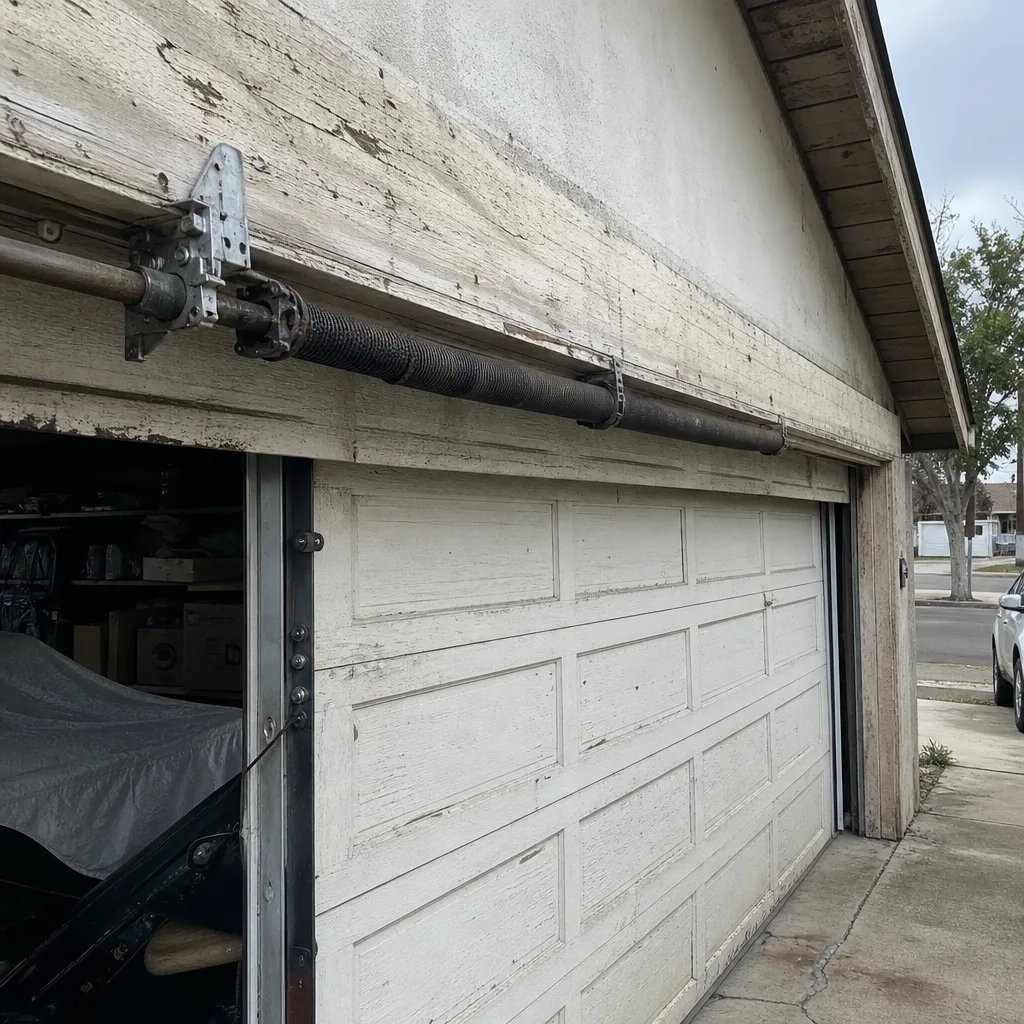 Before
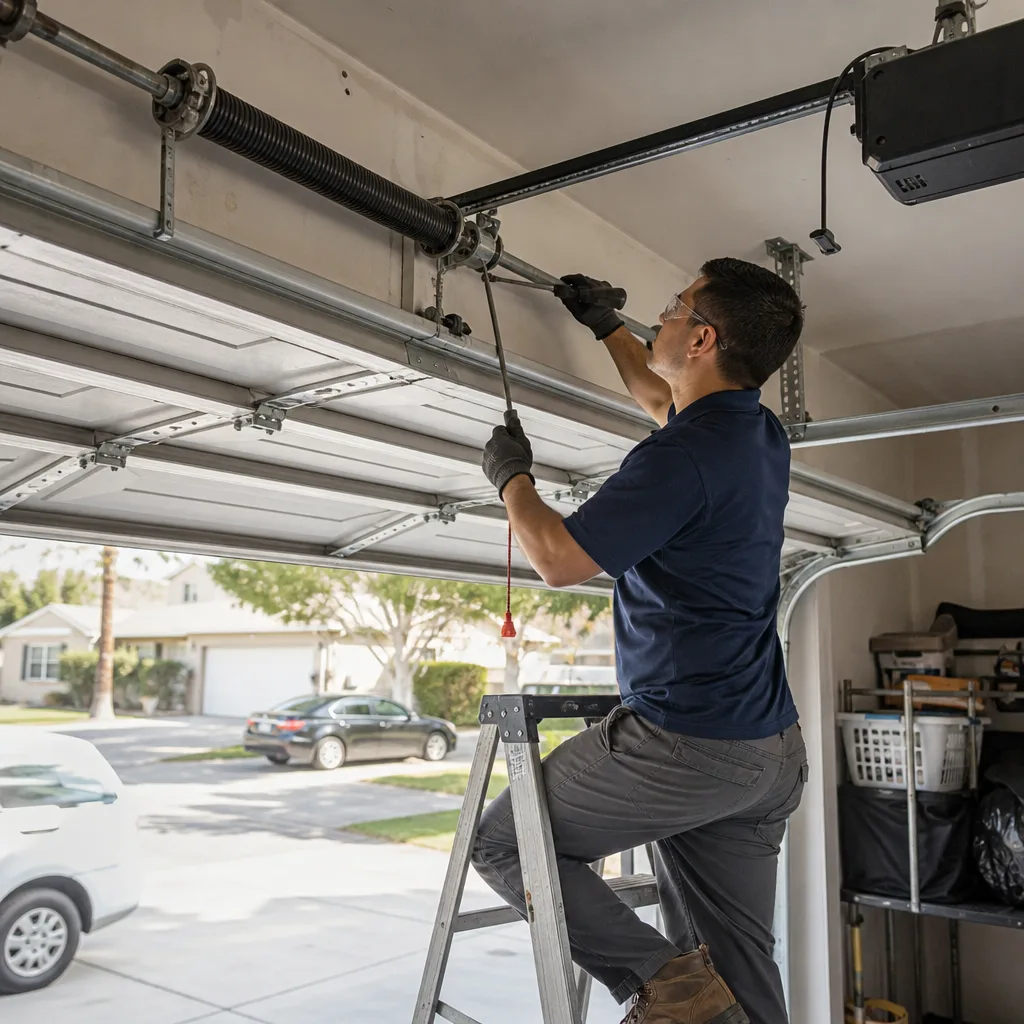 After
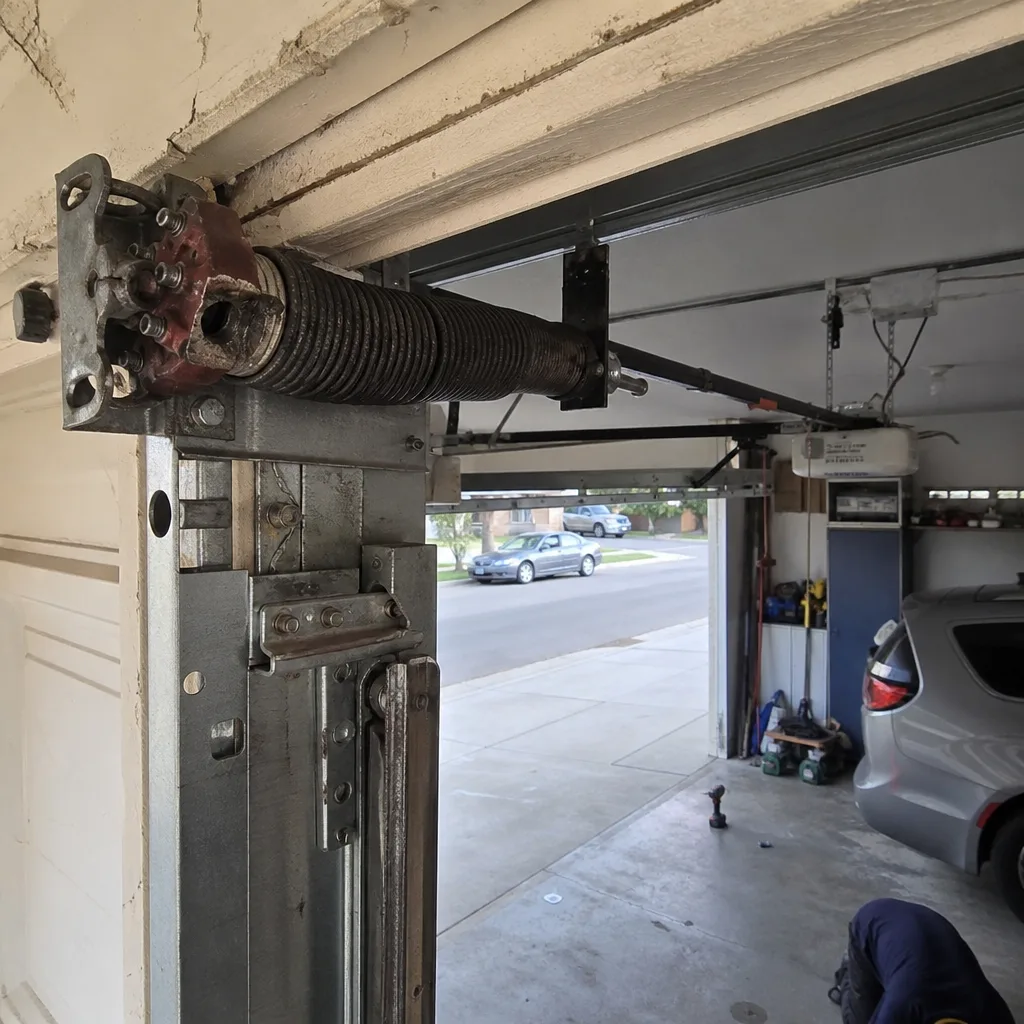 Before
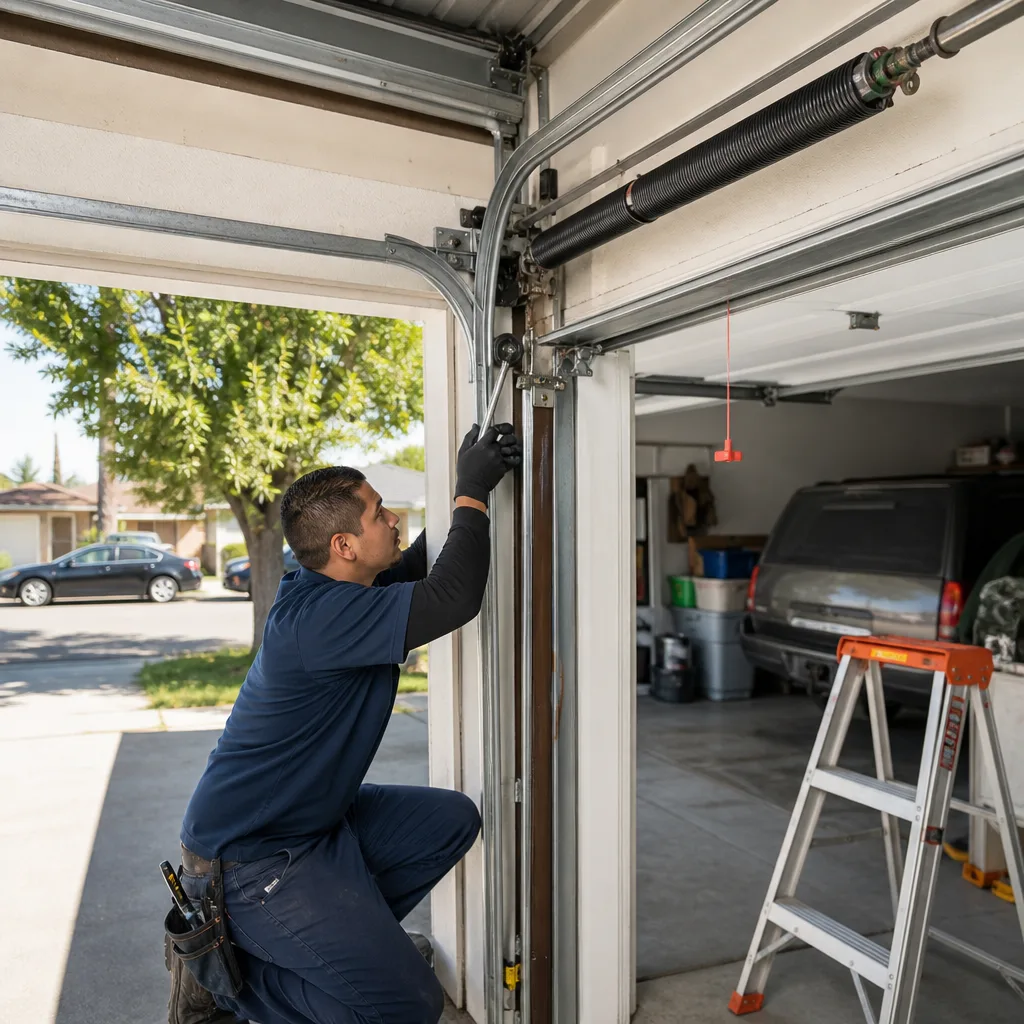 After