
Last updated November 2, 2026
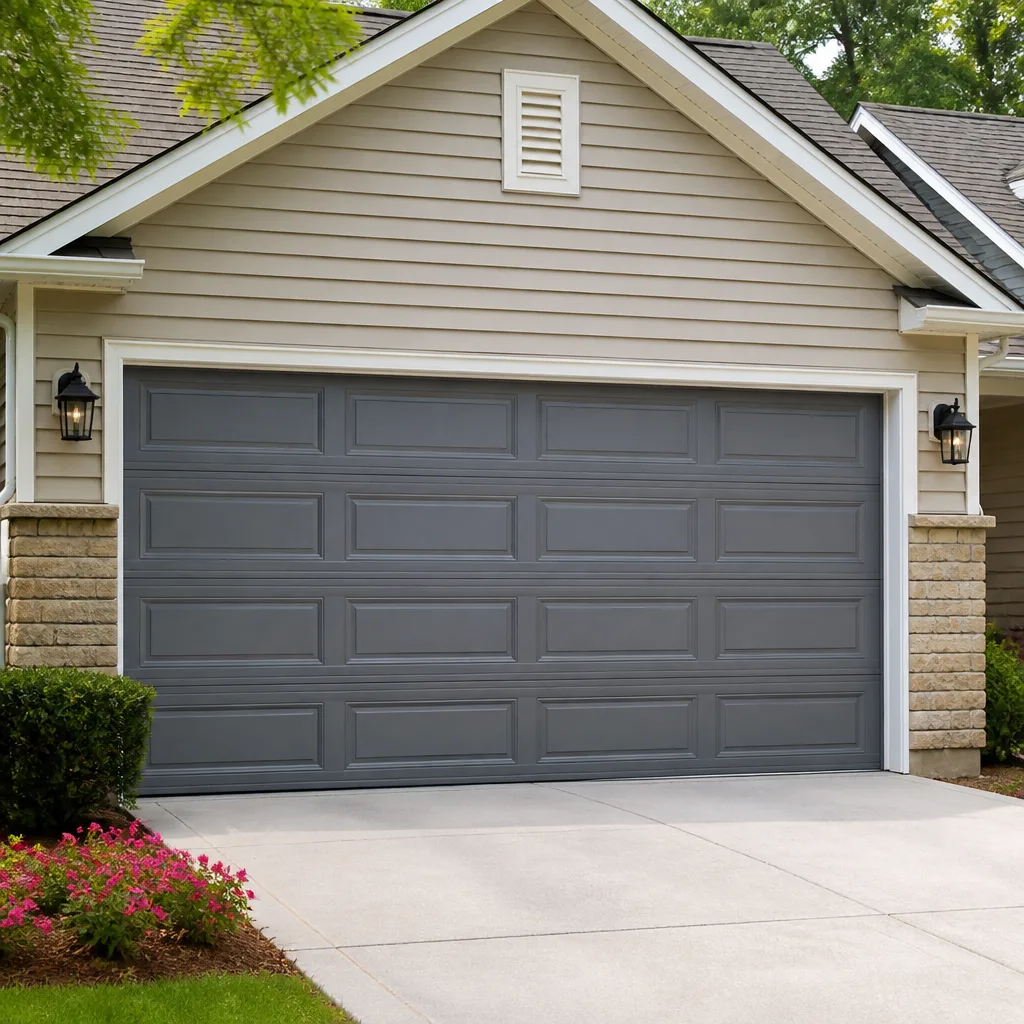 Raised-panel steel
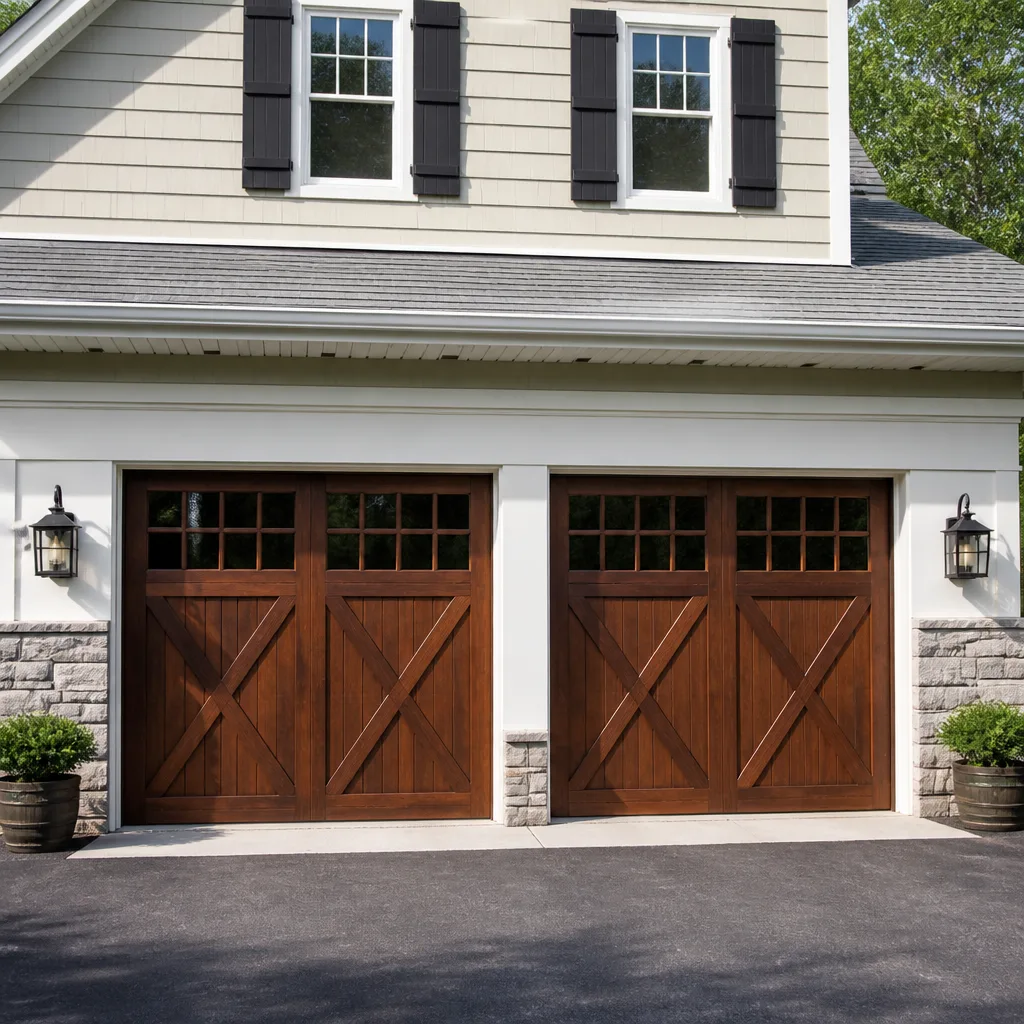 Carriage house
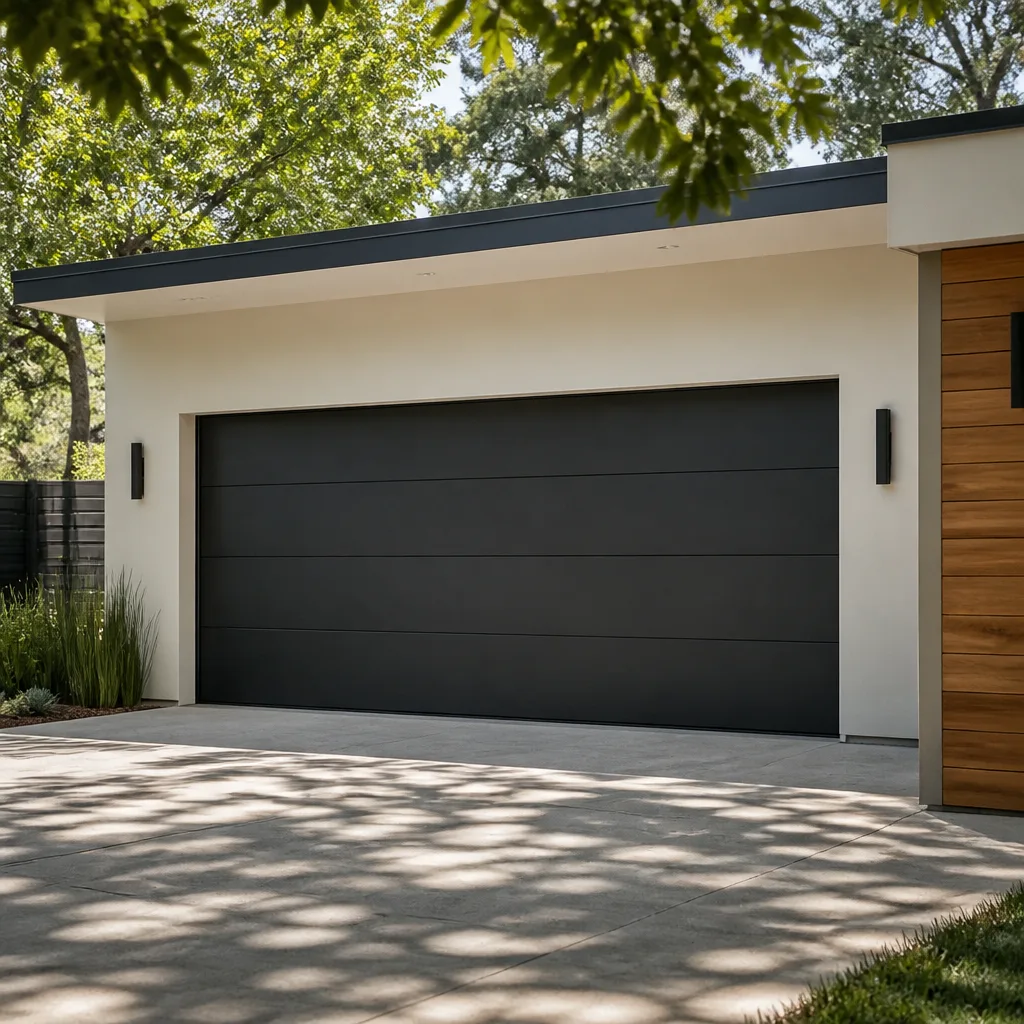 Modern flush
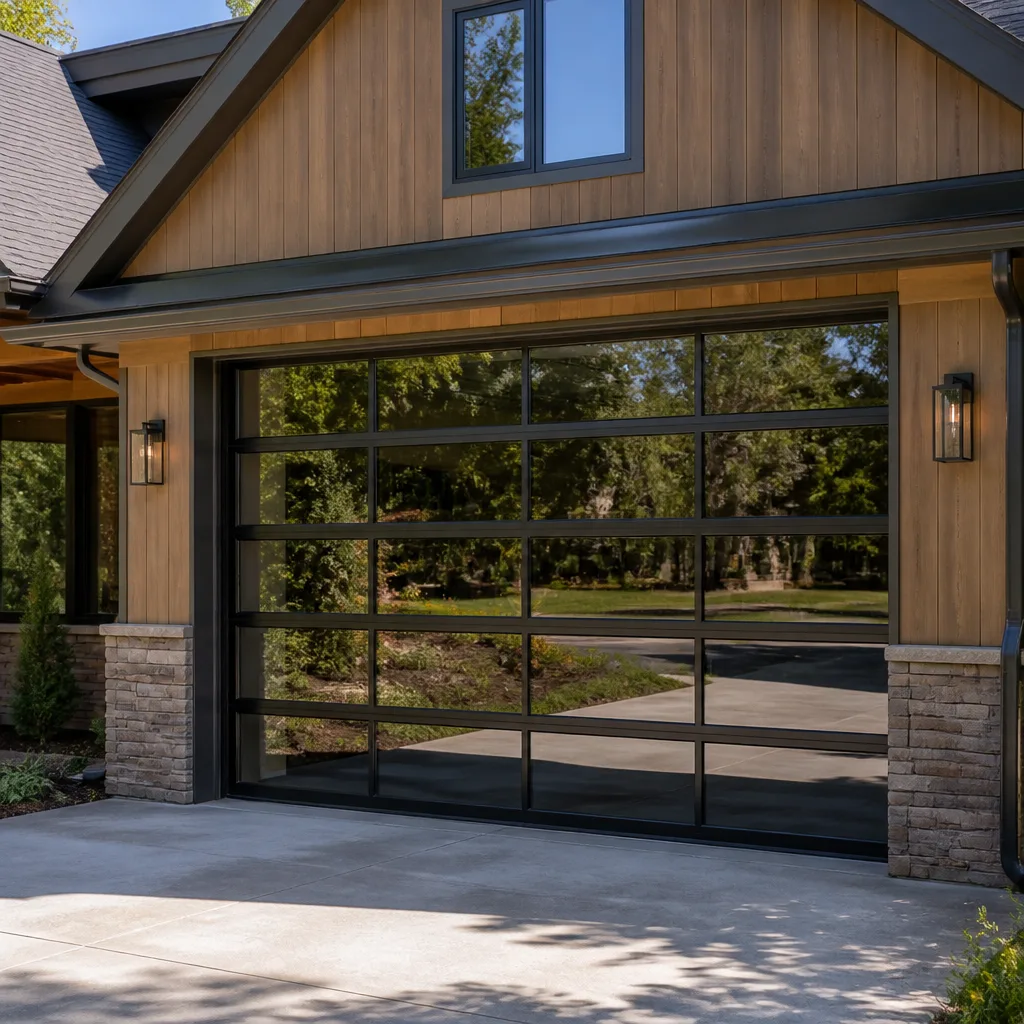 Full-view glass
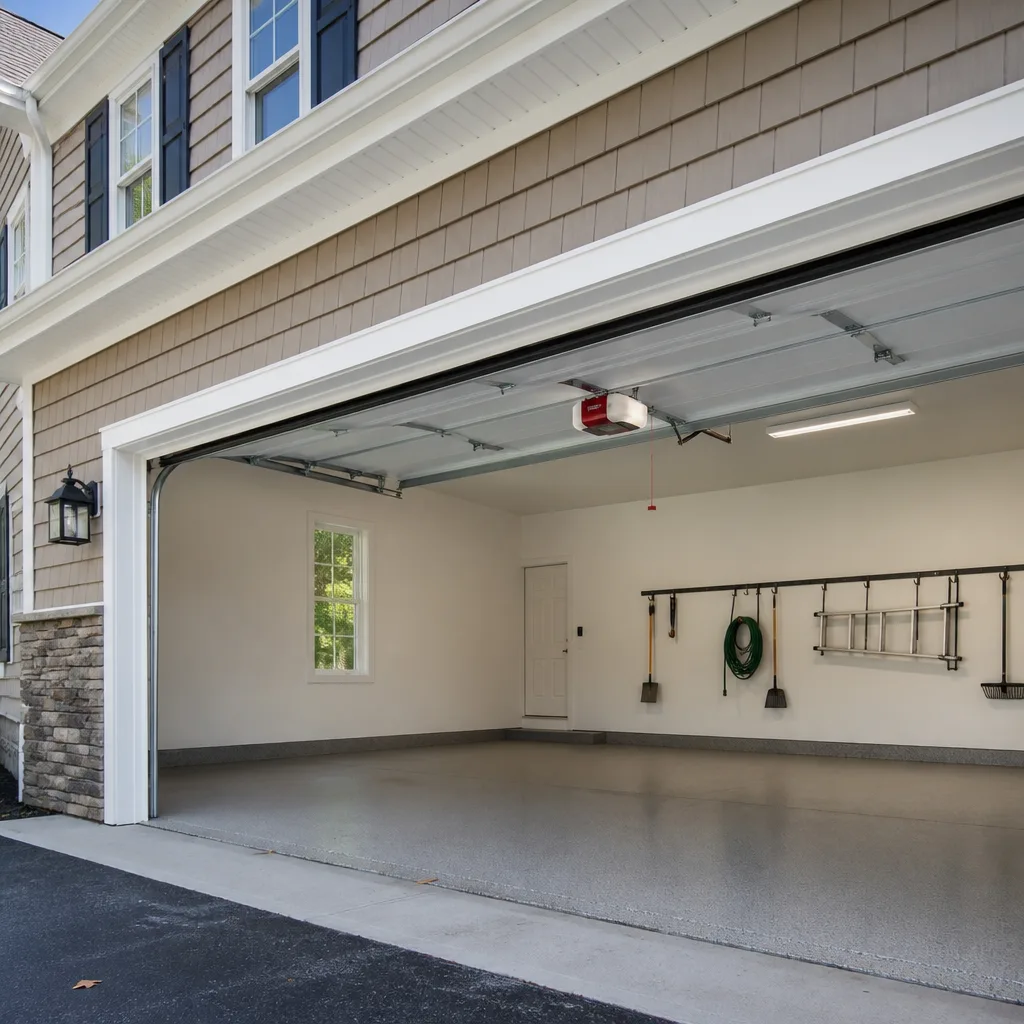 LiftMaster openers
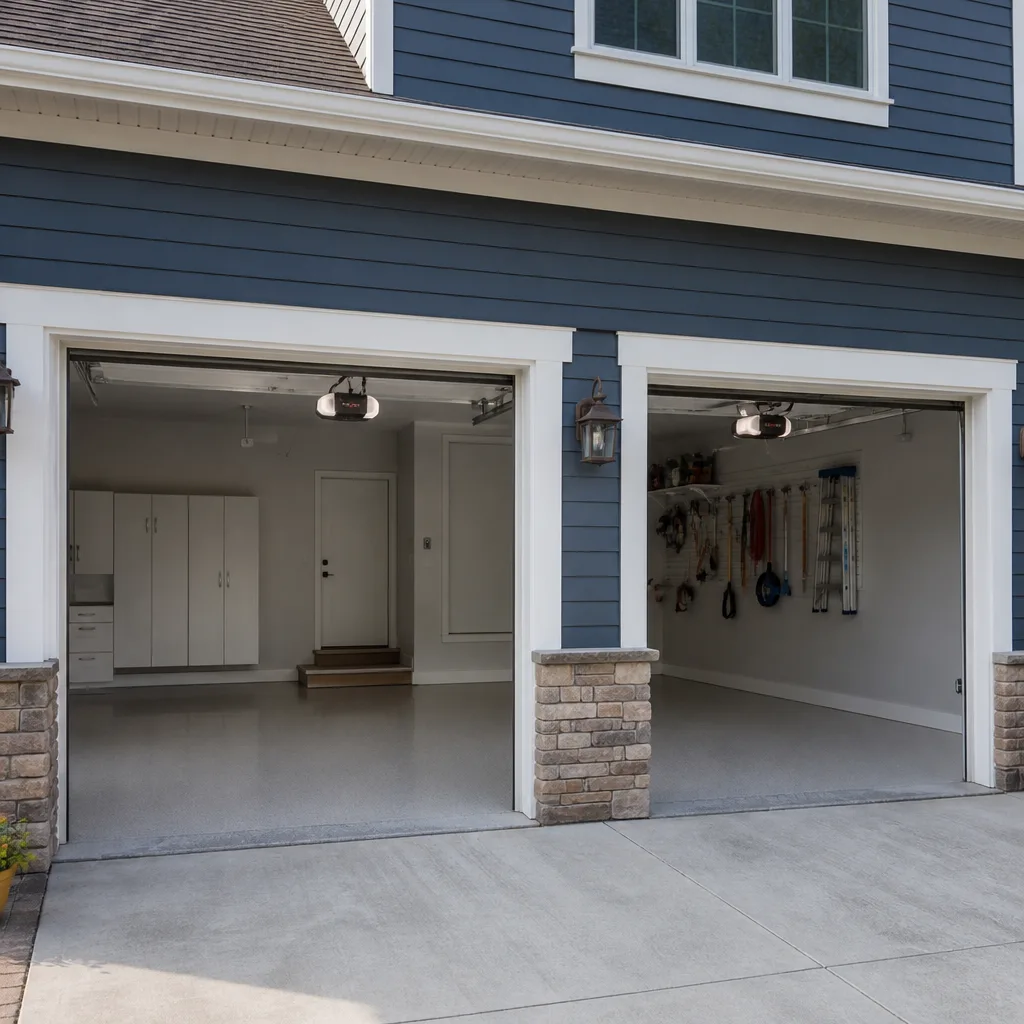 Chamberlain openers
Full 25-point door and opener safety check with every visit - springs, cables, rollers, tracks, and your LiftMaster or Chamberlain opener included
You get a price before we start. It does not change when the truck arrives.
Get your free estimateHow to Hire a Garage Door Contractor in Panorama City: A Step-by-Step Guide
Most homeowners in Panorama City spend more time researching a $40 toaster oven than they do the contractor about to install a 400-pound moving wall on their house. That is not an exaggeration. The garage door is the single largest moving object in your home, it operates under spring tension that can exceed 200 pounds, and it gets cycled roughly 1,500 times a year. Yet when the door fails, the average person calls the first number they see in a sponsored ad. In this guide, we’re going to walk through exactly how to verify a garage door contractor in Panorama City the way a technician would: license status, quote structure, warranty language, and the technical questions that reveal whether the person on the phone actually understands the system hanging above your car. For more guides & resources, see our blog.
Quick Answer
To hire a garage door contractor in Panorama City, verify the company holds a valid California C-61/D-28 specialty license on the CSLB website (takes under two minutes), confirm the quote separates parts from labor with specific line items, and ask the contractor to explain their spring sizing method and safety reversal testing process. A legitimate technician answers these questions without hesitation, quotes a firm price before work begins, and carries the common parts on the truck rather than promising to come back later.
Styles & brands we work with
- Raised-panel steel
- Carriage house
- Modern flush
- Full-view glass
- LiftMaster openers
- Chamberlain openers
Table of Contents
- The CSLB License Check: Your First Filter (2 Minutes)
- What the D-28 Classification Actually Covers
- Red Flags in Garage Door Quotes: What to Look For
- What a Legitimate Warranty Looks Like: Hardware vs. Labor
- Technical Questions That Separate Technicians from Truck Guys
- Why the Lowest Bid in Panorama City Is Often the Most Expensive
- Panorama City Specifics: Climate, Code, and the Local Market
- The Step-by-Step Hiring Process: From First Call to Finished Job
The CSLB License Check: Your First Filter (2 Minutes)
California requires any garage door contractor performing work above $500 in combined labor and materials to hold a specialty contractor license from the Contractors State License Board (CSLB). The classification for garage door work is C-61/D-28. This is not optional paperwork. An unlicensed operator working above the threshold is operating illegally in Panorama City, and if something goes wrong, you have limited recourse. Here’s the two-minute verification process:
- Open the CSLB website and navigate to the “Check a Contractor’s License” search tool.
- Ask the contractor for their license number before they arrive for the estimate. A real contractor has this number memorized or displayed on their vehicle, business card, and website. Hesitation is information.
- Verify that the license status shows “Active” and the classification includes D-28. A license that shows “Inactive,” “Suspended,” or “Expired” means you should stop right there.
- Check the bond and workers’ compensation fields. If the contractor claims to have employees but shows no workers’ comp coverage, walk away. You could be liable for on-site injuries.
- Look for suspensions or complaints. The CSLB records disciplinary actions, and a pattern of complaints is more telling than any online review.
In our experience servicing homes throughout Panorama City, the unlicensed operator is the most common source of what we call “fix-the-fix” appointments: jobs where a homeowner paid someone cash, the door worked for a month, and then the same problem came back. The unlicensed contractor’s pricing model relies on not paying for insurance, bonds, or continuing education, which is how they undercut legitimate bids by 30 to 40 percent. The cost is transferred to you when the repair fails.
What the D-28 Classification Actually Covers
The D-28 classification under California’s C-61 specialty license category specifically covers garage door installation, repair, and modification. That sounds straightforward, but the distinction matters more than most homeowners realize. The CSLB created specialty classifications precisely because garage door work involves components, forces, and failure modes that a general construction license does not adequately address. A D-28 holder has demonstrated competency in door weight calculations, spring tension systems, track alignment, and the electrical systems connected to automatic openers.
What this means practically in Panorama City is that the contractor standing in your driveway should be able to:
- Calculate the correct spring size for your specific door weight and height, which varies across brands like Clopay, Amarr, and Wayne Dalton panels. A spring that’s too weak or too strong changes door balance and wears out the opener prematurely.
- Understand cable drum alignment which is the component that determines whether the door rises evenly. A quarter-inch misalignment creates binding that gets worse every cycle.
- Test and adjust the safety reversal system required by federal law since 1993. This is not optional. A door that does not reverse when it detects an obstruction is a safety hazard, and a D-28 technician tests it as part of every service call.
- Diagnose opener-specific failures rather than replacing parts blindly. Different manufacturers, from Genie to LiftMaster, use different logic boards, travel modules, and photo-eye systems. The technician who knows your brand’s failure patterns saves you money.
One question worth asking: “Can you show me your license number before the estimate?” A contractor who arrives with it printed on the invoice, the truck, and the company shirt is doing what the law already requires. A contractor who evades the question is giving you all the information you need to end the conversation.
For a broader look at how to identify qualified technicians, our guide on Garage Door Repair in Panorama City covers the same verification standard from the repair side.
Red Flags in Garage Door Quotes: What to Look For
The quote you receive is a diagnostic tool in itself. A contractor who has real experience pricing garage door work in Panorama City produces a quote with specific line items: the parts by name or part number, the labor as its own line, and the service call or trip charge disclosed separately if one exists. The vague quote, by contrast, looks like a ransom note written by someone who has never ordered a torsion spring in their life.
Here are the red flags we tell every homeowner to treat as deal-breakers:
- A single line item that says “garage door repair.” That is not a quote. That is a request for a blank check. A real quote names the parts: torsion spring pair, cable assembly, roller set with specific size, opener gear kit. If they cannot name the part, they likely do not know what they are replacing.
- Refusal to separate parts from labor. This one shows up constantly. The contractor quotes $450 total and refuses to break it down. What this typically hides is a parts markup of 400 percent or a labor charge that would embarrass a law firm. Parts and labor are separate cost centers. You have a right to see both.
- The “same-day special” pressure tactic. Any contractor who claims the price is “only good today” or offers a “today-only discount” is not pricing work. They are manufacturing urgency because they know if you get two more quotes, their number will not survive comparison. Garage door pricing does not change daily like airline tickets.
- No mention of the specific spring cycle rating. Torsion springs are sold by cycle life: 10,000 cycles is the standard, 25,000 is an upgrade, 50,000 is high-end. If the quote says “spring replacement” but does not specify the cycle rating, you are probably getting the cheapest 10,000-cycle spring on the truck, which may fail again in three to five years of daily use in a city like Panorama City where garage doors serve as primary entry points.
- Charging a “consultation fee” before quoting. Established contractors in this market generally provide free estimates. A contractor who wants $75 to come look at your door before telling you a price is often charging for the privilege of not committing to anything.
The clean quote, by contrast, looks boring. It has a parts section with specific components, a labor section with the work described, a total that is firm, and a line that says the price is agreed before work starts. Boring is good.
What a Legitimate Warranty Looks Like: Hardware vs. Labor
Warranty structure separates the serious contractor from the opportunist faster than any other single factor. A garage door job has two warranty surfaces, and they are different things: the hardware warranty and the labor warranty. The hardware warranty covers the physical components: springs, cables, rollers, panels, opener motor. These warranties come from the manufacturer, not the installer. A Clopay door, for instance, carries a manufacturer’s warranty on panels; an Amarr door carries a similar coverage on its construction; a Genie opener carries a motor and parts warranty that varies by model. The contractor’s job is to install these components such that the manufacturer’s warranty remains valid, which includes following manufacturer installation specifications and torque requirements.
The labor warranty is the contractor’s own promise: if the installation work fails, the contractor comes back and fixes it. A legitimate labor warranty is specific about its duration. Common in this industry is a one-year labor warranty on new installations and a shorter window, often 30 to 90 days, on repairs. What you should never accept is a verbal promise without a written commitment. If the warranty period is not on the invoice, it does not exist.
Three questions that expose warranty reality quickly:
- “What parts carry a manufacturer’s warranty, and what does your labor warranty cover separately?” A technician who cannot distinguish the two is not someone who has worked with manufacturers directly.
- “What voids the warranty on the parts you’re installing?” A knowledgeable answer includes things like improper lubrication, using the garage door as a pedestrian door exclusively, or tampering with the spring system. A blank stare is a red flag.
- “Is the labor warranty in writing on the invoice?” The answer should be yes. If it is not, you are holding a quote, not a contract.
One Panorama City specific note: some neighborhoods here have detached garages that face alley access, and those doors sit in more direct sun exposure than attached front-facing garages. Heat accelerates wear on nylon rollers and weatherstripping. A contractor who mentions this on the estimate knows the local housing stock; a contractor who quotes blind has probably never worked this side of the 405.
Technical Questions That Separate Technicians from Truck Guys
The cheapest filter in contractor selection is a phone call before the estimate. You do not need to know how to fix a garage door. You need to know the questions that force a real answer. Here are four technical questions and what a competent answer sounds like:
1. “How do you size the torsion springs for my door?”
The legitimate answer involves weighing the door or calculating it from panel specifications, then matching the spring dimensions and coil count to door weight and height. A competent technician might answer: “Door weight determines wire size, door height determines spring ID and length, and we measure torque on the drum after installation.” An illegitimate answer is: “We just match what was there before.” The problem with that answer is that the previous spring may have been sized wrong by the last unlicensed contractor, which is why the door failed prematurely in the first place.
2. “How do you check cable drum alignment during installation?”
A real technician knows this matters because uneven cable tension causes the door to bind, stress the opener, and eventually throw a cable off the drum, which is a failure that can leave your door crooked and stuck. The answer should mention verifying that both cables seat in their grooves at the same drum position, leveling the bottom of the door, and checking tension under load. A shrug in response means the person has never replaced a set of lift cables and barrels on a full-size residential door, which should concern you because Panorama City has thousands of full-size two-car doors that cycle daily.
3. “How do you test the safety reversal after you’re done?”
Federal regulations, specifically UL 325, set the standard. The technician should place a 2×4 or equivalent obstruction under the closing door and confirm the door reverses on contact. They should also test the photo-eye system, which uses an invisible beam across the door opening. The answer should be immediate because this is a mandatory step on every service call, not a bonus feature. A technician who says “the opener is automatic, it’s fine” has just admitted they skipped a legal safety requirement.
4. “What’s the most common failure you see on my specific brand?”
This is where brand knowledge becomes visible. Ask about the brand currently on your garage door. If you have a Wayne Dalton door, a technician familiar with their torque tube system and center-bearing wear patterns can tell you what fails most often. If you have a Genie opener, a technician who knows the travel-module failure pattern and the capacitor issue on older screw-drive models will have an answer. The contractor who cannot name a brand-specific failure pattern for the door you literally just described is likely a generalist who treats all doors as identical, and that is how misdiagnosis happens.
For the full breakdown of what a diagnostic visit should cover when things go wrong, our page on Garage Door Opener Repair in Panorama City walks through the opener-specific diagnostic process.
Why the Lowest Bid in Panorama City Is Often the Most Expensive
Panorama City has a dense housing stock, a high percentage of attached garages used as primary storage or living-space extensions, and a local market where garage door contractors range from state-licensed specialists to unlicensed cash operators. The bid spread you will see reflects this: licenses, bonding, insurance, and continuing education cost a real contractor real money every year, and those costs appear in the bid. The unlicensed operator has none of these costs, so they undercut by 30 percent or more. The math is simple until you play it forward.
Here is the cost parity calculation most homeowners never do. Suppose the unlicensed bid is $300 for a torsion spring replacement. The licensed bid is $450. The unlicensed operator installs a 10,000-cycle standard spring, which in a two-car garage used four times daily lasts about six years. The licensed contractor at $450 might install the same 10,000-cycle spring with a proper labor warranty, or discuss a 25,000-cycle upgrade for roughly $100 more, which extends the service life past fifteen years. Spread over time, the licensed replacement costs less per cycle even at a higher upfront price. And that is before you account for the cost of the unlicensed operator’s mistakes, which typically surface within eighteen months and require re-hiring someone, at which point the total cost exceeds the licensed bid from the start.
The financial incentive structure also matters. A contractor who sells both repairs and new installations, like the full spectrum covered on our Garage Door Installation in Panorama City page, has no structural reason to talk you into a new door when a $180 repair solves the problem. The contractor who only installs new doors has every reason to tell you the old one is “beyond repair” regardless of what is actually wrong. When a company can honestly tell you which path makes sense, the number they give you means something.
Panorama City Specifics: Climate, Code, and the Local Market
Panorama City sits in the San Fernando Valley, which means the garage doors here work harder than most. Summer temperatures routinely pass 95 degrees, and garage interiors run hotter. That heat accelerates the breakdown of nylon rollers, causes weatherstripping to crack and pull away from the door frame, and stresses the electronics in garage door openers, particularly circuit boards that sit inside the motor housing where ambient temperatures can exceed 120 degrees. A technician who works this market knows to check for heat-related wear patterns even on doors that are only five years old.
Local housing stock also shapes the work. Panorama City has a significant concentration of mid-century single-family homes built between 1948 and 1960, many with original garage configurations. These doors are frequently wood, sometimes on rails and rollers that have not been replaced in fifty years. The tracks may be slightly out of square from decades of settling. This is not a job for a parts-swapper. It requires a technician who understands how to correct track alignment, shim hinges, and assess whether a 60-year-old wood door is worth re-hanging or is ready for a modern replacement like an Amarr or Clopay steel door. The right call depends on the specific door’s condition, not on a script.
Then there is the code environment. Los Angeles Municipal Code applies in this area, and while garage door work is not as heavily regulated as, say, electrical panel replacements, the building code does require that all replacement doors meet current safety standards, including safety reversal systems and, for new construction or major renovations, thermal performance standards. A contractor who knows which jobs trigger permit requirements and which do not is a contractor who has done this work in the city, not just somewhere with a mailing address that says “Los Angeles.”
For reference, a few of the neighborhood names we regularly service around Panorama City: Arleta on the northeast edge, Van Nuys directly south, North Hills to the west, and Mission Hills across the 405. The housing stock shifts as you cross these lines, and the door problems shift with it, from older two-door detached garages in Arleta to more recent track homes in North Hills. A contractor who knows the local stock is working from experience, not from a template.
The Step-by-Step Hiring Process: From First Call to Finished Job
Here is the entire hiring process, compiled from years of watching good contractor relationships form quickly and bad ones unravel slowly. The whole thing takes longer to read about than to do.
- Build a candidate list of three contractors. Start with local companies that list a physical Panorama City or San Fernando Valley service area. Avoid national call centers that dispatch independent contractors sight unseen. You want the person who starts the job to be the person who diagnosed it, which is how Mesa Garage Door Service runs its calls in the Valley.
- Check CSLB status for all three. See the section above. This takes under two minutes per company and eliminates the unlicensed operators before they ever set foot in your driveway. Write down the license number of any contractor who passes, because you will want it again on the day of the job.
- Call each candidate and ask two technical questions. The spring sizing question and the brand-specific failure question from earlier are the strongest filters. You are not looking for a perfect answer; you are looking for a confident answer that shows actual experience. Vague language, long pauses, or redirects to “let me just come look” after the second question are signs the person knows how to drive, not how to diagnose.
- Schedule the estimates for the same day. Back-to-back estimates let you compare quotes while the memory of each visit is fresh. A 9 a.m., 11 a.m., and 1 p.m. schedule is ideal. Tell each contractor you are getting competing quotes. The honest ones will welcome it; the pressure salespeople will try to close on the spot.
- Compare the quotes line by line. Same-day comparison is where vague line items get exposed. When one quote says “torsion spring pair, 0.225 wire, 24-inch, per pair” and another says “door repair,” the choice is not about price anymore.
- Confirm the warranty in writing before scheduling. Have the contractor write the warranty terms on the quote, including duration and what it covers. If they resist, you have your answer. A warranty that can’t be written down isn’t a warranty.
- Confirm the price before work starts. On the day of the job, repeat this sentence: “The price we agreed is the price, and nothing starts until we’re both clear on that.” A legitimate contractor will say yes instantly, because that’s how they do business. A contractor who gets nervous at this point is planning something.
- After the job, test the door yourself. Open and close it fully three times. Watch for even movement, listen for grinding, and place a 2×4 under the closing door to confirm the safety reversal works. Every legitimate technician expects you to do this, because they just did it in front of you.
The broad strokes of what a complete repair or installation looks like are covered on our core page for Mesa Garage Door Service home services, including the diagnostic-first approach that governs every job we take in Panorama City.
Common Mistakes to Avoid
- Hiring without checking the CSLB license. In California, this is not a preference; it is a legal protection. An unlicensed contractor who damages your property or leaves a hazardous door has no legal obligation to return, and you have reduced recourse through the CSLB because they have no standing to file a complaint against a contractor who was never licensed.
- Accepting a quote with a single “total” line. A contractor who does not itemize is either protecting a markup that would not survive scrutiny or does not actually know what parts they plan to install. Either way, you are about to pay more than the work is worth.
- Paying a large deposit on a repair. Repair work on a garage door is a same-day job for most failures. Springs, rollers, cables, opener logic boards: all of these are completed in one visit. A contractor asking for a 50 percent deposit before ordering parts for a repair is funding their own cash flow at your expense. Installation deposits are normal; repair deposits are a flag.
- Choosing a contractor who cannot name your garage door brand. In Panorama City, you see Wayne Dalton doors from the 1990s, Genie openers from the 2000s, and modern Chamberlain and LiftMaster units. A technician who installs all of them has brand-specific knowledge. A technician who does not know the difference between a torque tube and a torsion tube is going to learn on your door.
- Ignoring the safety reversal test. A garage door opener without a functioning auto-reverse mechanism is a machine that closes 400 pounds of door onto anything in its path. This is a federal safety requirement and a top cause of garage door injuries nationwide. If your contractor leaves without showing you the test, they did not finish the job.
- Choosing on price alone in a market where unlicensed operators are common. Panorama City, like much of the Valley, has a persistent underground economy in garage door work. The low bid is not coming from efficiency. It is coming from the absence of insurance, bonding, and legal accountability. That savings is an illusion with a short time horizon.
- Skipping the warranty conversation. Every garage door job has a hardware warranty and a labor warranty, and they are different. If your contractor cannot explain both in one sentence, the next call you make will probably be to someone else, fixing the same component.
See the difference
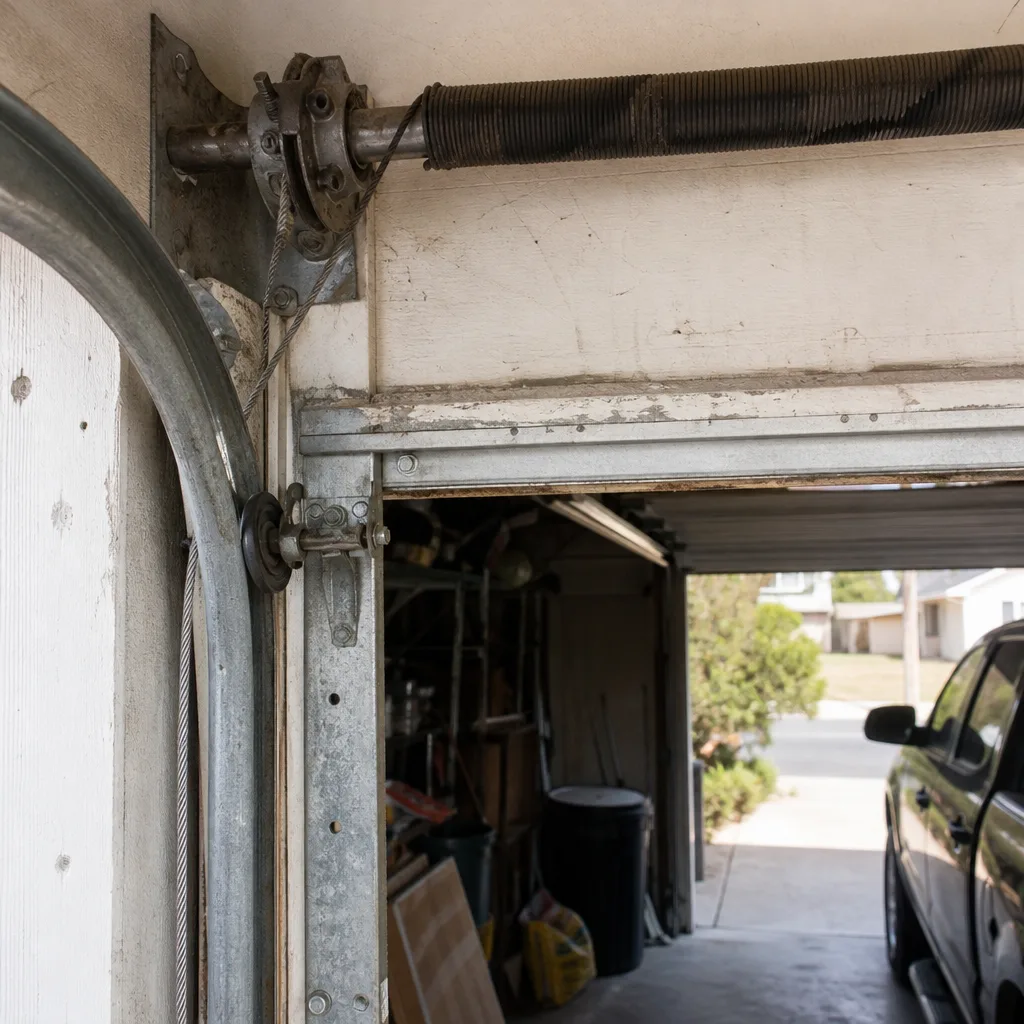 Before
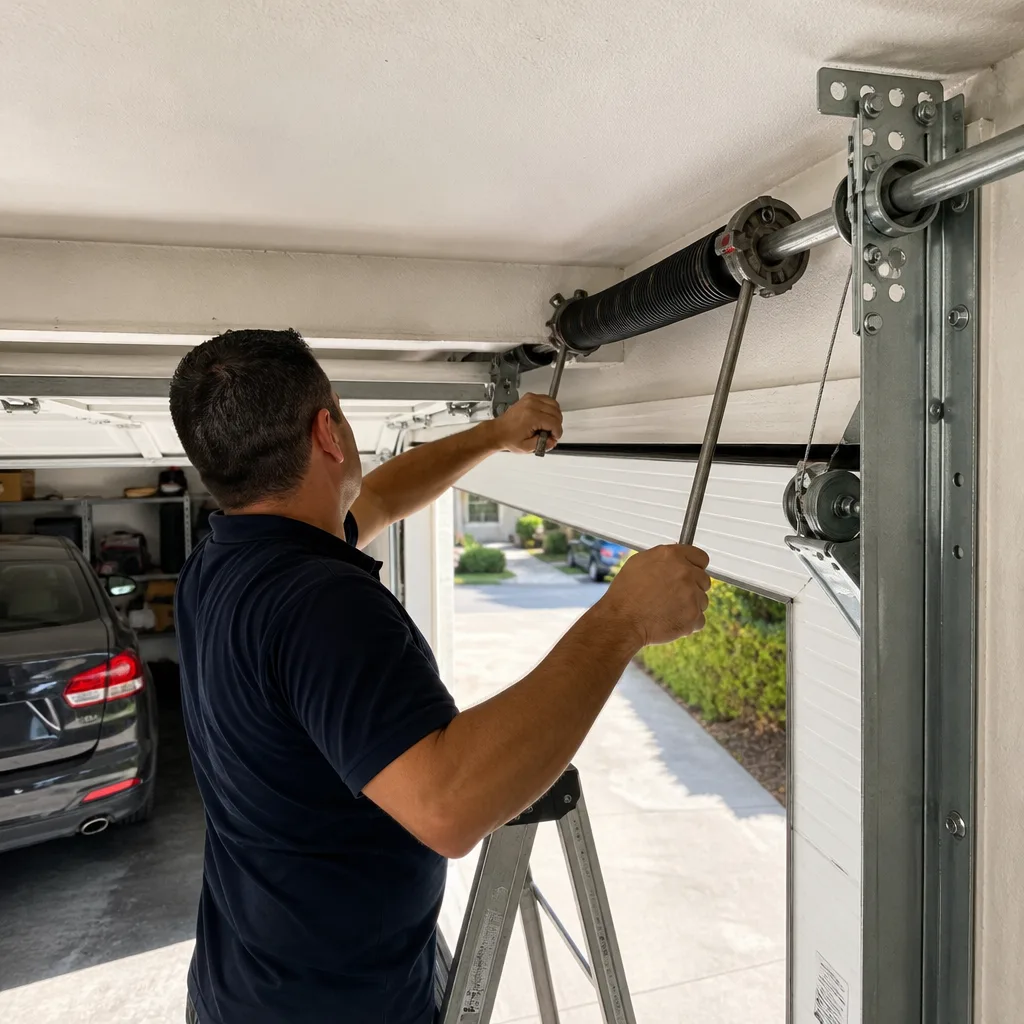 After
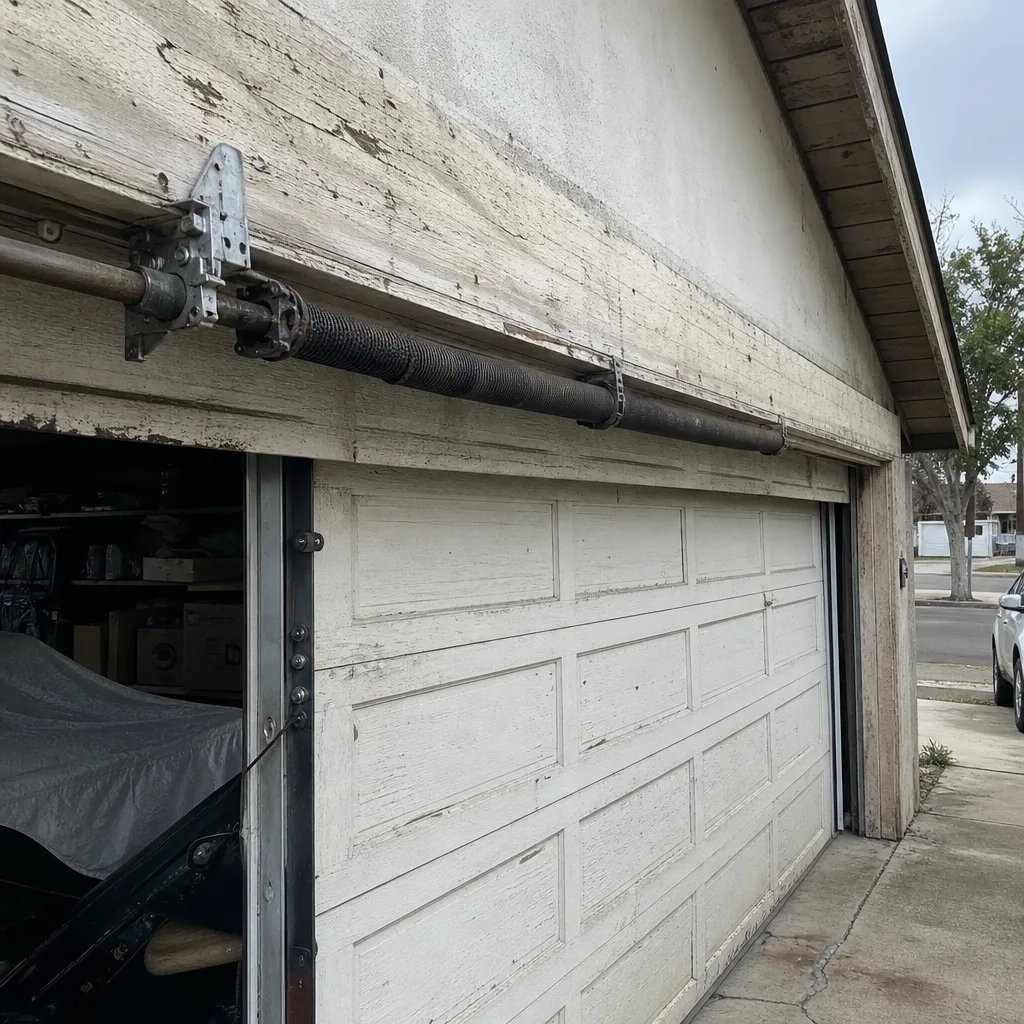 Before
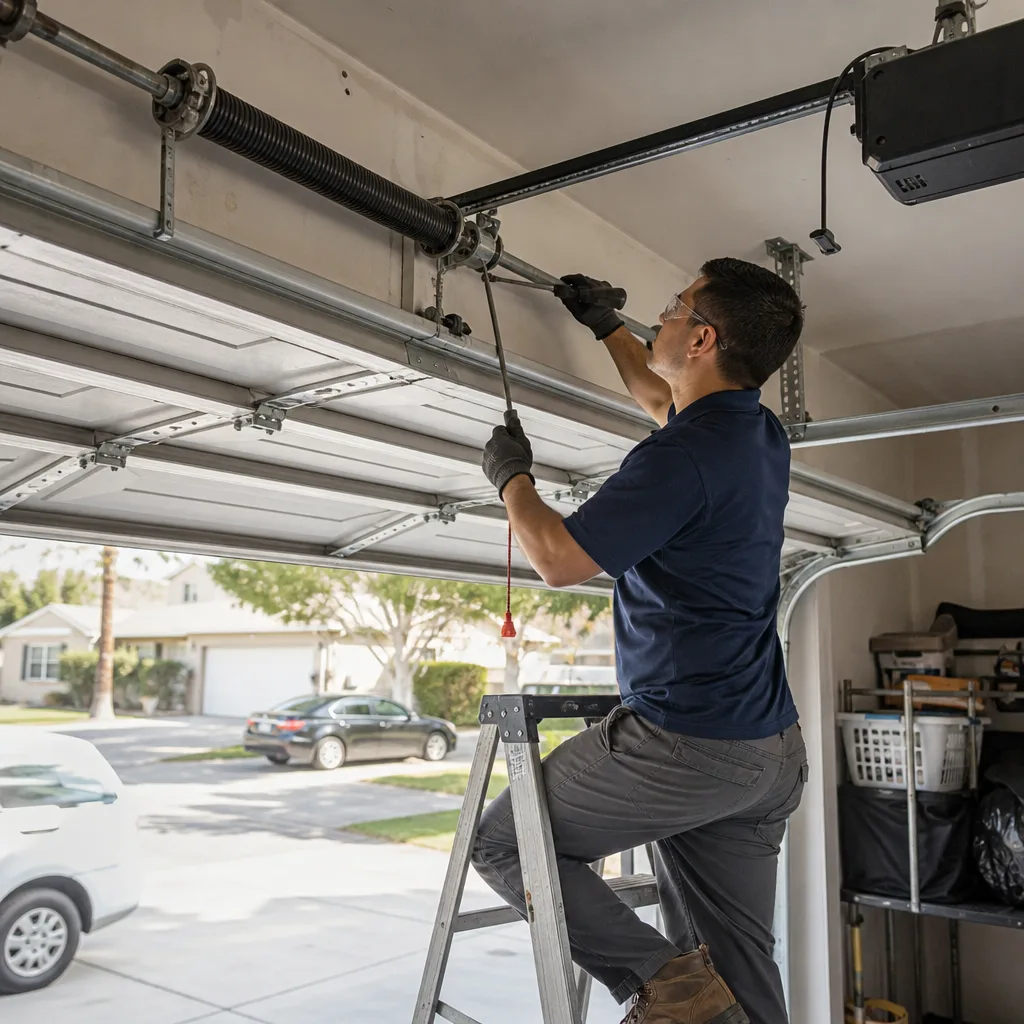 After
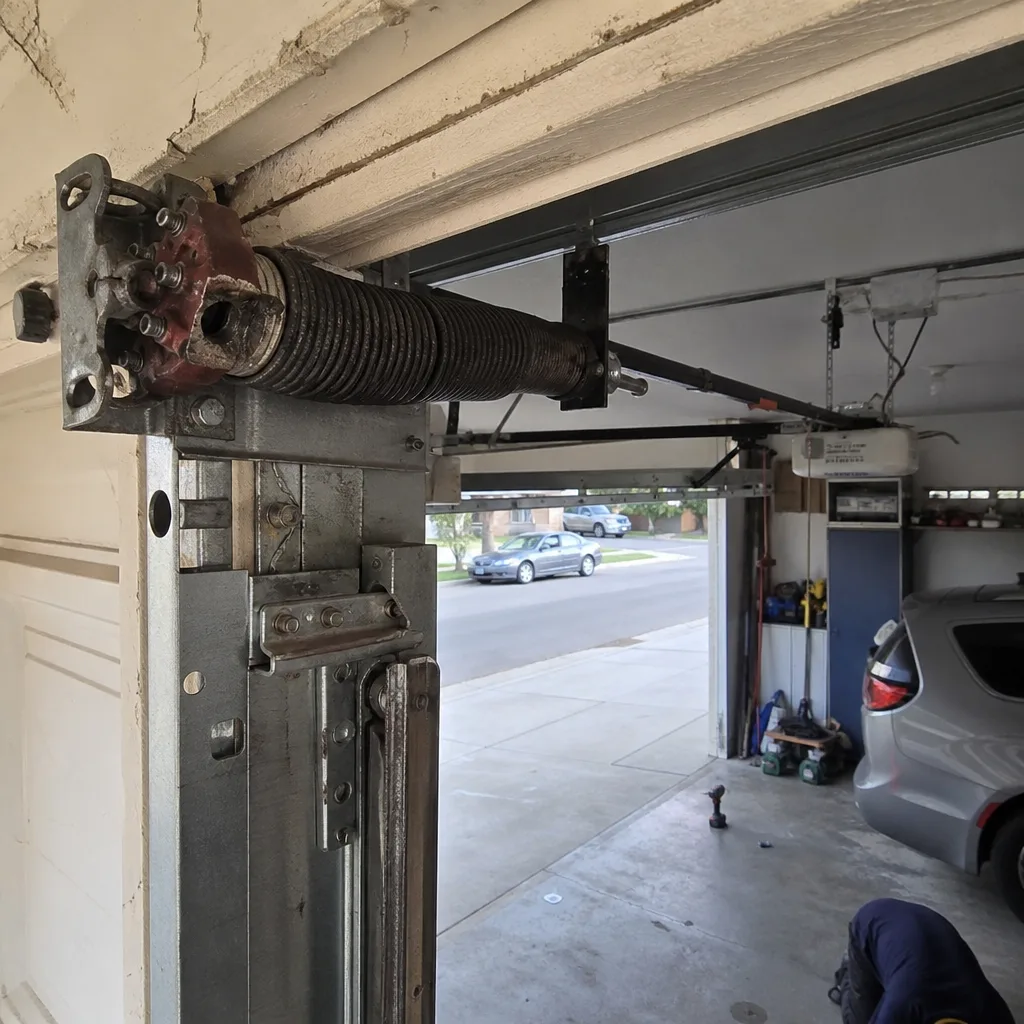 Before
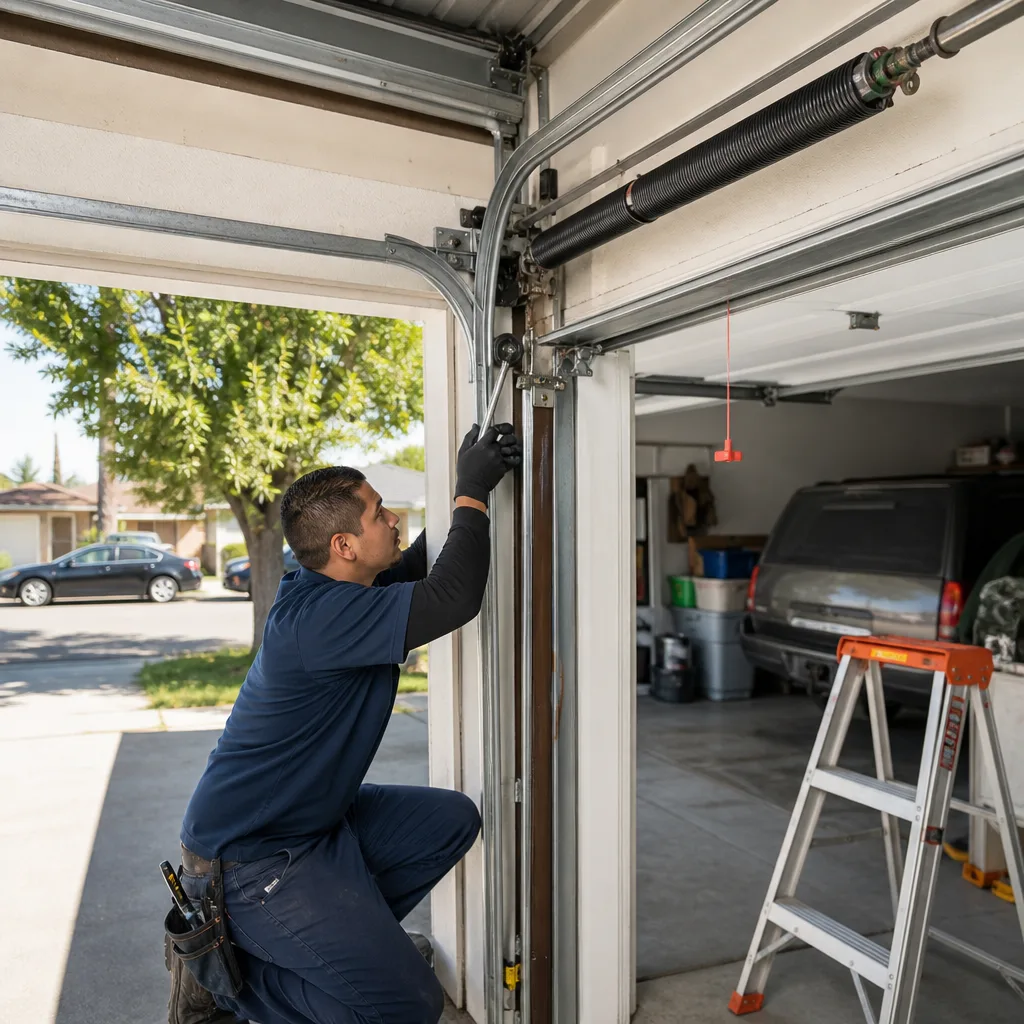 After
When to Call a Professional
There are garage door situations where waiting makes things worse, and there are garage door situations where attempting a fix yourself is genuinely dangerous. The spring system is the obvious one. Torsion springs hold massive tension, and when they break, the release is violent. No homeowner should replace a torsion spring without the correct winding bars and experience, and even then, the risk is not worth the savings. The same goes for cables: a cable that slides off the drum under tension can snap unpredictably. More common situations that warrant a professional call include a door that only opens two feet before reversing, an opener that runs but does not move the door, a door that has come off its tracks, and any grinding noise that gets worse with each cycle. See The Complete Garage Door Repair Guide for Panorama City Homeowners for deeper troubleshooting. For any of these, Mesa Garage Door Service offers free estimates in Panorama City. Call (833) 620-3545 and we will tell you what is wrong and what it costs, in that order.
Frequently Asked Questions
Most garage door repairs in Panorama City fall between $180 and $450, depending on the component and whether parts are worn individually or in sets. A roller replacement on a single-car door sits at the low end, while a pair of torsion springs with higher cycle ratings lands at the higher end, and a full door replacement is a separate conversation entirely. Call (833) 620-3545 for an exact quote in Panorama City: estimates are free, and the price you are quoted before the work starts is the price you pay.
California requires a C-61/D-28 license for garage door work over $500 in combined labor and materials, and unlicensed operators performing this work in Panorama City expose you to liability and substandard repairs. The license is not a bureaucratic formality; it means the contractor carries the required bonding and insurance and has demonstrated competency in the specific discipline of garage door systems. For a simple roller replacement under the threshold it may feel like overkill, but the same person who is unlicensed for that job is also unlicensed for the spring job that follows it.
With a legitimate contractor, the quote given after diagnosis is the price, and nothing begins until you have agreed to it. The reason for a proper diagnostic visit is to see the door before pricing, not to use an on-site visit as a lever to inflate costs. If a contractor quotes by phone and then raises the number after arrival, that is not diagnosis; that is a bait-and-switch, and it happens often enough in this market that we mention it specifically every time we discuss hiring.
A competent technician diagnoses the specific failure: logic board issues, gear wear, sensor problems, or motor failure, and tells you honestly whether replacing a component or the entire unit makes more sense. A modern opener from a brand like Genie or LiftMaster is often worth repairing if the failure is a single component like a capacitor or travel module, but an older unit with a burned-out motor and discontinued parts is usually cheaper to replace. We specialize in opener diagnosis by brand, which means we know the failure patterns on each manufacturer before we even take the cover off.
Yes, we provide same-day service for garage door repairs across Panorama City and the surrounding San Fernando Valley, and our trucks carry the common parts for mid-century and modern doors alike. For a door that will not close, that urgent response matters both for security and for the simple fact that a raised garage door is an open invitation to any passing opportunist. Call (833) 620-3545 and we will give you a straight answer on today’s availability.
We service and install the eight most widely installed brands in North American homes: LiftMaster, Chamberlain, Genie, Clopay, Amarr, Wayne Dalton, Craftsman, and Raynor. That breadth is intentional, because in a market like Panorama City the housing stock ranges from 1950s wood doors to modern smart-home openers, and a technician who only knows one or two brands is going to guess when they see the other six. Our brand-specific diagnostic approach means the technician who arrives knows your door’s quirks by name, not by trial and error.
The Bottom Line
Hiring a garage door contractor in Panorama City comes down to verification, not persuasion. Verify the license, verify the quote structure, verify the warranty, and verify technical competence with questions that force real answers. The entire process takes under an hour of phone calls and a few focused minutes of quote comparison, and it is the difference between hiring a technician who fixes your door and a stranger who charges you to practice on it. The honest contractor answers every question directly, writes down every number, and tests the safety reversal before leaving. If you are in Panorama City and need a straight answer about your garage door, call (833) 620-3545 for a free estimate. We know your brand, and we will tell you whether repair or replacement is the right call, without the pressure.
Written by the team at Mesa Garage Door Service, serving Panorama City since 2012.